


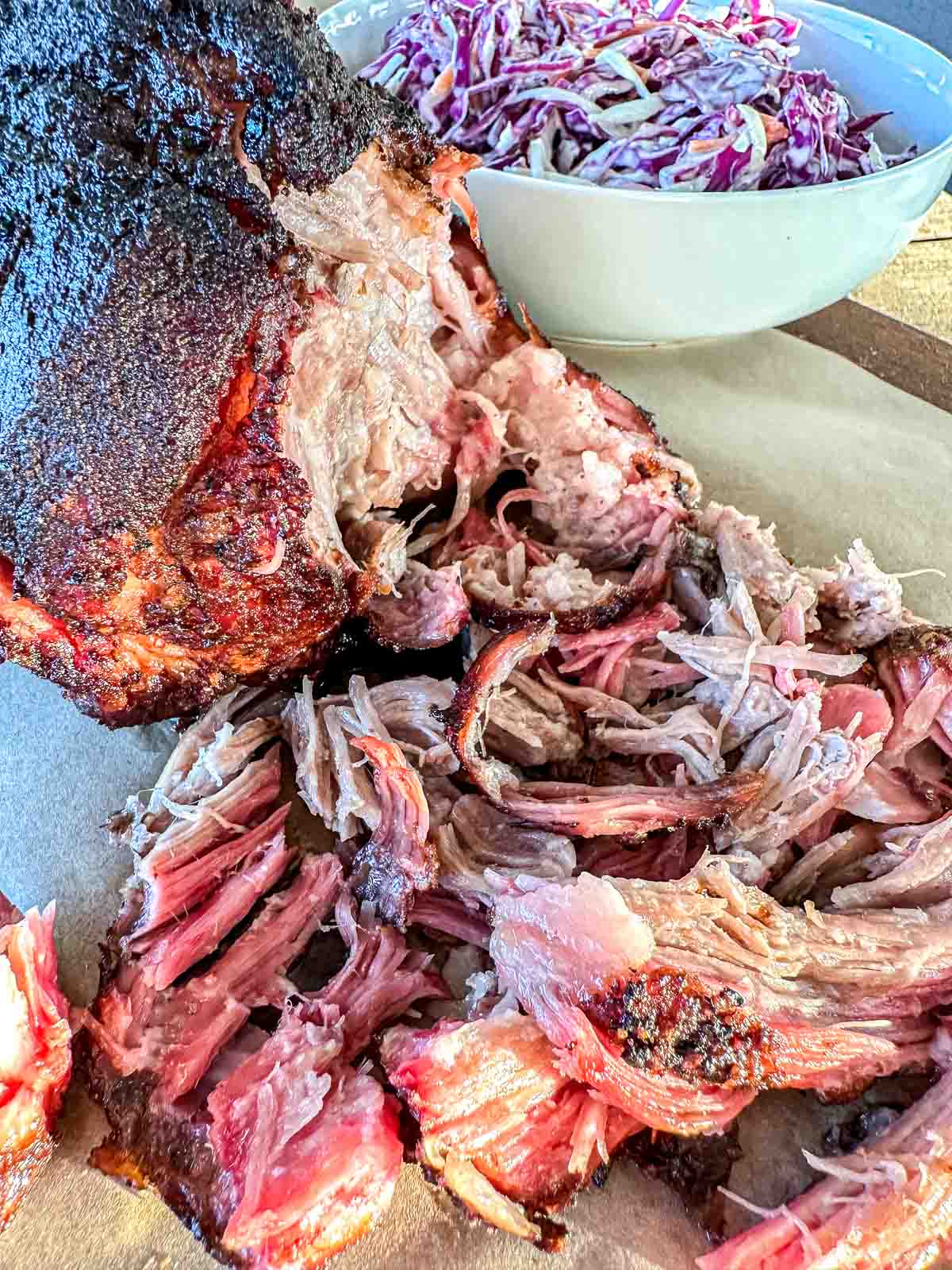
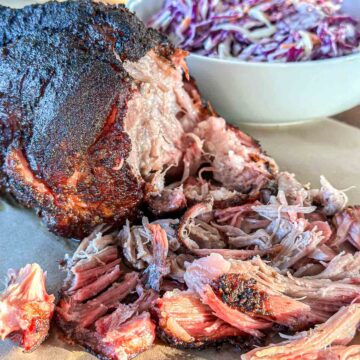
Smoked Pork Butt is a slow-smoked cut of pork shoulder cooked until tender and shredded into juicy pulled pork. It's a family-style BBQ recipe that works well for backyard gatherings, weekend cooks, or meal prep for the week. Unlike traditional low-and-slow versions, this method cooks at 275°F and finishes wrapped with butter and hot honey to ensure it stays moist and deeply flavorful.
Recipe At A Glance
- 🔥 Method: Smoker or Pellet Grill
- 🌡️ Smoker Temp: 275°F
- ⏱️ Total Time: 6-7 hours plus rest
- 🍖 Cut: 4 lb Boneless Pork Butt
- 👥 Serves: 6-8
- 🏈 Best For: Backyard BBQs, Memorial Day cookouts, pulled pork sandwiches, tacos, and meal prep
- ✨ What Makes It Different: Pasture-raised pork, stone-ground mustard binder, and a hot honey butter wrap for guaranteed juiciness
Living in Texas, BBQ isn't optional. It's part of the culture. My husband grew up eating it, and when we go out to BBQ restaurants, he almost never orders pulled pork. Not because he doesn't like it, but because too often it's dry, stringy, or drowning in sauce to hide the fact that it was overcooked.
Over time, this smoked pork butt recipe became something we built together. He brings the Texas BBQ roots, and I bring the real-food philosophy and attention to ingredients. It's one of those recipes we make over and over again, especially when the smoker is already running for things like my Traeger Smoked Brisket or Smoked Baby Back Ribs, and we're feeding a crowd.
In my opinion, pulled pork should never need sauce to save it. It should be juicy enough and flavorful enough to stand on its own. That's why we cook this boneless pork butt at 275°F for a balanced cook time, then wrap it with butter and just a touch of hot honey. The result is tender, flavorful smoked pulled pork that stays moist without being overly sweet.
As a long-time nutrition coach, I've always believed that quality ingredients matter. That starts with the meat itself. We use pasture-raised pork from ButcherBox whenever possible because the flavor and marbling are noticeably better.
When you start with great pork and cook it properly, you don't need to mask it with heavy sauces or complicated techniques.
If you're looking for more easy smoker recipes that pair well with smoked pork, check out my smoked baked beans, smoked mac and cheese, or smoked baked potatoes for a full backyard spread.
Jump to:
- Recipe At A Glance
- Ingredients You'll Need
- Substitutions And Variations
- How Long Does It Take To Smoke Pork Butt
- Smoked Pork Butt Temperature Guide
- Key tip
- How Much Pork Butt Per PErson?
- How To Make Smoked Pulled Pork Butt
- Best Pellets For Smoked Pork Butt
- Nadia's Expert Tips And Notes
- What To Serve With SMoked Pork Butt
- Storage And Reheating
- Recipe FAQs
- More Smoker Recipes You'll Love!
- Smoked Pork Butt (Juicy Pulled Pork Recipe)
Ingredients You'll Need
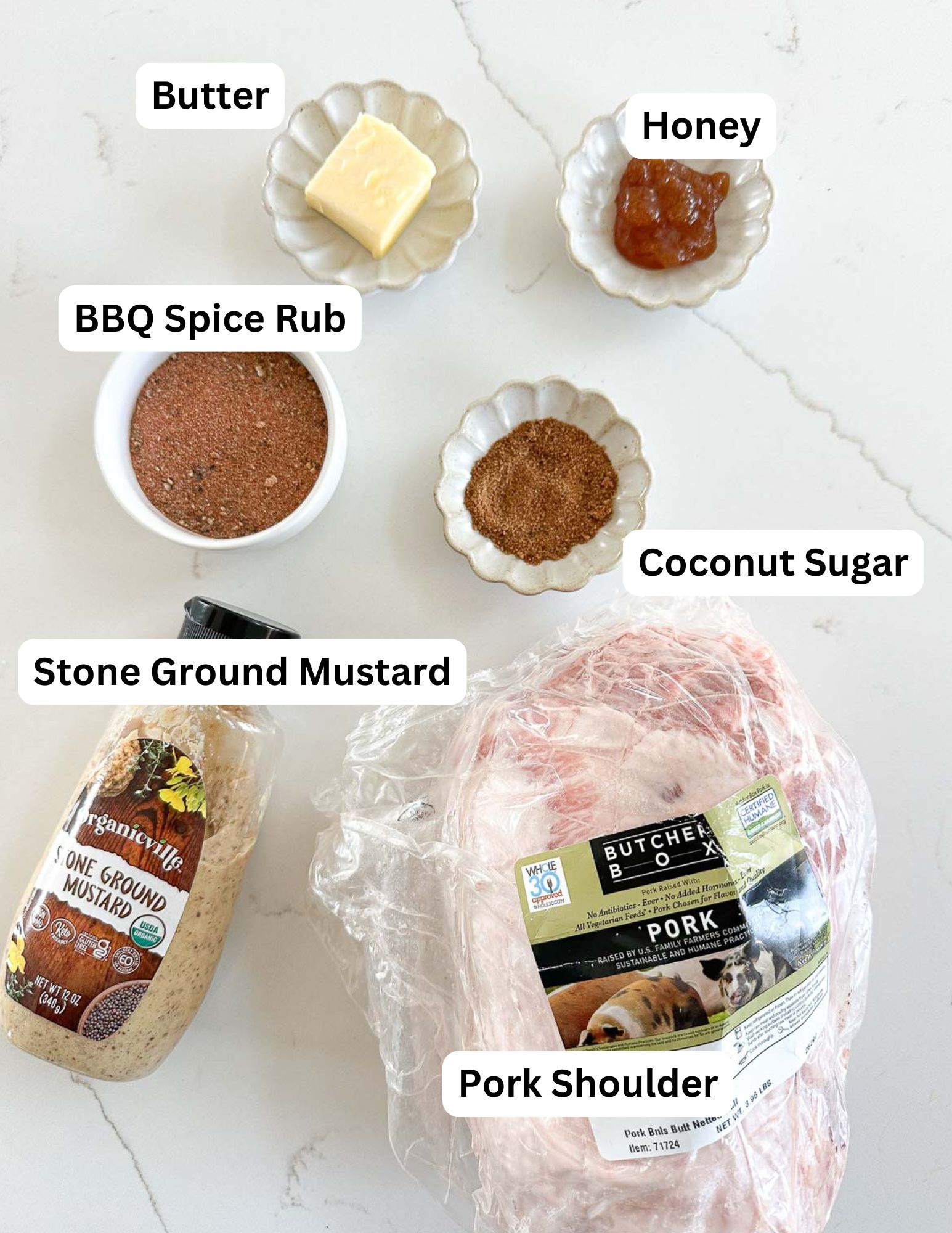
- Boneless Pork Butt: I order mine from ButcherBox because I prefer pasture-raised pork with good marbling and clean sourcing. When you're shopping, look for a high-quality cut with visible fat running throughout. That marbling is what keeps the pork tender and juicy during the smoke. I typically use a boneless pork butt because it cooks a little faster and shreds beautifully, but you can absolutely use a bone-in pork shoulder if you prefer. Just plan for a slightly longer cook time.
- Stone Ground Mustard: This acts as a simple binder that helps the seasoning adhere evenly and build a proper bark. I like stone-ground mustard because it has a little texture and depth, but once the pork hits the smoker, the mustard flavor fades into the crust. You won't taste mustard, you'll just notice a better bark.
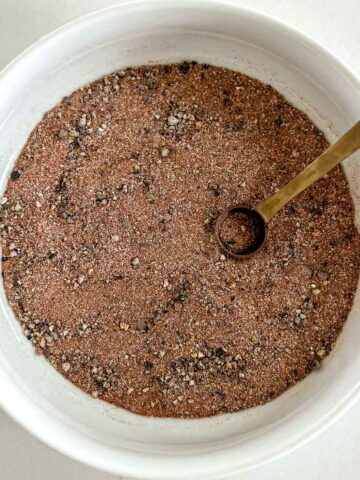
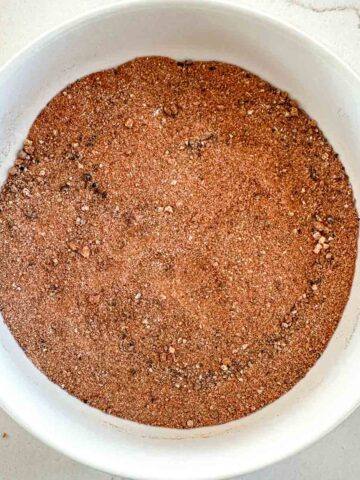
- Pulled Pork Rub: A balanced rub with smoked paprika, kosher salt, garlic powder, and coconut sugar builds steady flavor without overpowering the pork. I usually make my own homemade pulled pork rub, but you can absolutely use your favorite store-bought blend. Since we finish this smoked pork butt with butter and hot honey, the seasoning should support the meat instead of competing with it.
- Unsalted Butter: I use Kerrygold butter because the flavor is rich and clean, and in a simple recipe like this, the quality really shows. During the wrap, the butter melts down into the pork and creates a natural basting effect that helps keep the meat juicy.
- Mike's Hot Honey: This is one of those small ingredients that makes a big difference. It adds a subtle sweet heat without turning the pork into candy. The honey deepens the bark and enhances the natural flavor of the pork rather than masking it with heavy sauce.
- Coconut Sugar: I prefer coconut sugar because it's unrefined and has a deeper, almost caramel-like flavor compared to white sugar. It supports browning and rounds out the savory flavors in the wrap without making the pork overly sweet. Just a small amount helps bring everything together.
See the recipe card for full information on ingredients and quantities.
Substitutions And Variations
- Bone-In Pork Shoulder: If you prefer bone-in pork shoulder instead of boneless pork butt, it works beautifully. The bone adds a bit of natural insulation during the cook and can help the meat stay juicy. Just plan for a slightly longer cook time and rely on probe tenderness rather than watching the clock.
- Avocado Oil Binder: If mustard isn't your thing, you can use a light coating of avocado oil instead. It won't add flavor the way mustard does, but it will still help the rub adhere and support bark development. The key is keeping the layer thin so the surface stays tacky rather than wet.
- Butcher Paper Wrap: If you want a firmer bark with a more traditional Texas-style finish, wrap the pork in butcher paper instead of foil. Foil traps steam and creates softer, juicier pulled pork, while butcher paper allows a bit of airflow that helps preserve the bark.
- Skip the Hot Honey: If you prefer a more classic smoked pulled pork profile, you can leave out the hot honey and coconut sugar and keep the wrap savory with just butter. This leans closer to traditional Texas BBQ, where the meat stands fully on its own.
- Add Apple Cider Vinegar: If you enjoy a little brightness, add a small splash of apple cider vinegar to the foil before sealing the wrap. It won't make the pork tangy, but it adds depth and balances the richness of the meat and butter.
Each of these variations keeps the integrity of the recipe intact. The foundation stays the same: high-quality pork, balanced seasoning, and cooking to tenderness rather than chasing a specific number on the thermometer.
How Long Does It Take To Smoke Pork Butt
Smoking a pork butt at 275°F typically takes about 6 to 7 hours for a 4-pound boneless pork butt, plus at least 1 hour of resting time. Most of that cook time is completely hands-off while the smoker slowly renders the fat and tenderizes the meat.
Here's the timeline from my test cook using a 4-pound boneless pork butt at 275°F.
| Stage | Temperature | Time | What Happens |
|---|---|---|---|
| Prep & Season | Room Temperature | About 15 minutes | Trim excess fat, pat the pork dry, coat with mustard binder, and season with the pulled pork rub. Let it rest briefly while the smoker heats. |
| Smoke (Unwrapped) | 275°F | About 3 ½ hours | The pork cooks uncovered while the bark develops. Internal temperature rises to about 165-170°F. |
| Wrap & Continue Cooking | 275°F | About 2 hours | Wrap tightly with butter, Mike's Hot Honey, and coconut sugar. Continue cooking until the pork reaches 200-203°F and feels probe-tender. |
| Rest | Room Temperature | About 1 hour | Let the pork rest wrapped so the juices redistribute before shredding. |
Total Cook Time: About 6-7 hours, plus resting time.
The exact cooking time can vary depending on the size of the pork butt, how consistent your smoker temperature is, and whether the pork is bone-in or boneless.
Smoked Pork Butt Temperature Guide
When smoking pork butt, temperature matters more than time. The pork goes through several stages as it cooks, and knowing what to expect helps you avoid overcooking or pulling it too early.
| Stage | Internal Temperature | What's Happening |
|---|---|---|
| Start Smoking | 40-50°F | The pork goes onto the smoker cold and begins slowly absorbing smoke flavor. |
| Bark Development | 140-160°F | The surface dries out and the seasoning forms a dark, flavorful crust. |
| The Stall | 160-170°F | The internal temperature slows down, or stalls, as moisture evaporates from the meat. This is completely normal. |
| Wrap Stage | 165-170°F | Once the bark is set, wrap the pork with butter, hot honey, and coconut sugar to help it finish cooking and stay juicy. |
| Finished Cooking | 200-203°F | The pork becomes tender, and the connective tissue breaks down. The probe should slide in easily. |
| Resting | After Cooking | Rest the pork for at least 1 hour so the juices redistribute before shredding. |
Key tip
Always cook smoked pork butt to probe tenderness, not just a number. Most pork butts finish between 200°F and 203°F, but what really matters is that the thermometer slides into the meat with very little resistance.
How Much Pork Butt Per PErson?
When planning a BBQ or feeding a group, it helps to know how much pork butt to buy. It shrinks during cooking as the fat renders and the meat is shredded, so the final yield is always a bit smaller than the raw weight.
As a general rule, plan on about ½ pound of cooked pulled pork per person.
| Number of People | Amount Of Pork Butt To Buy |
|---|---|
| 4 people | 3-4 pounds |
| 6 people | 4-5 pounds |
| 8 people | 5-6 pouunds |
| 10 people | 6-8 pounds |
If you're serving multiple BBQ meats like smoked brisket, smoked chicken thighs, or baby back ribs, you can scale the pork down slightly since guests will be sampling a little of everything.
How To Make Smoked Pulled Pork Butt
This is an overview with step-by-step photos. Full ingredients & instructions are in the recipe card below.
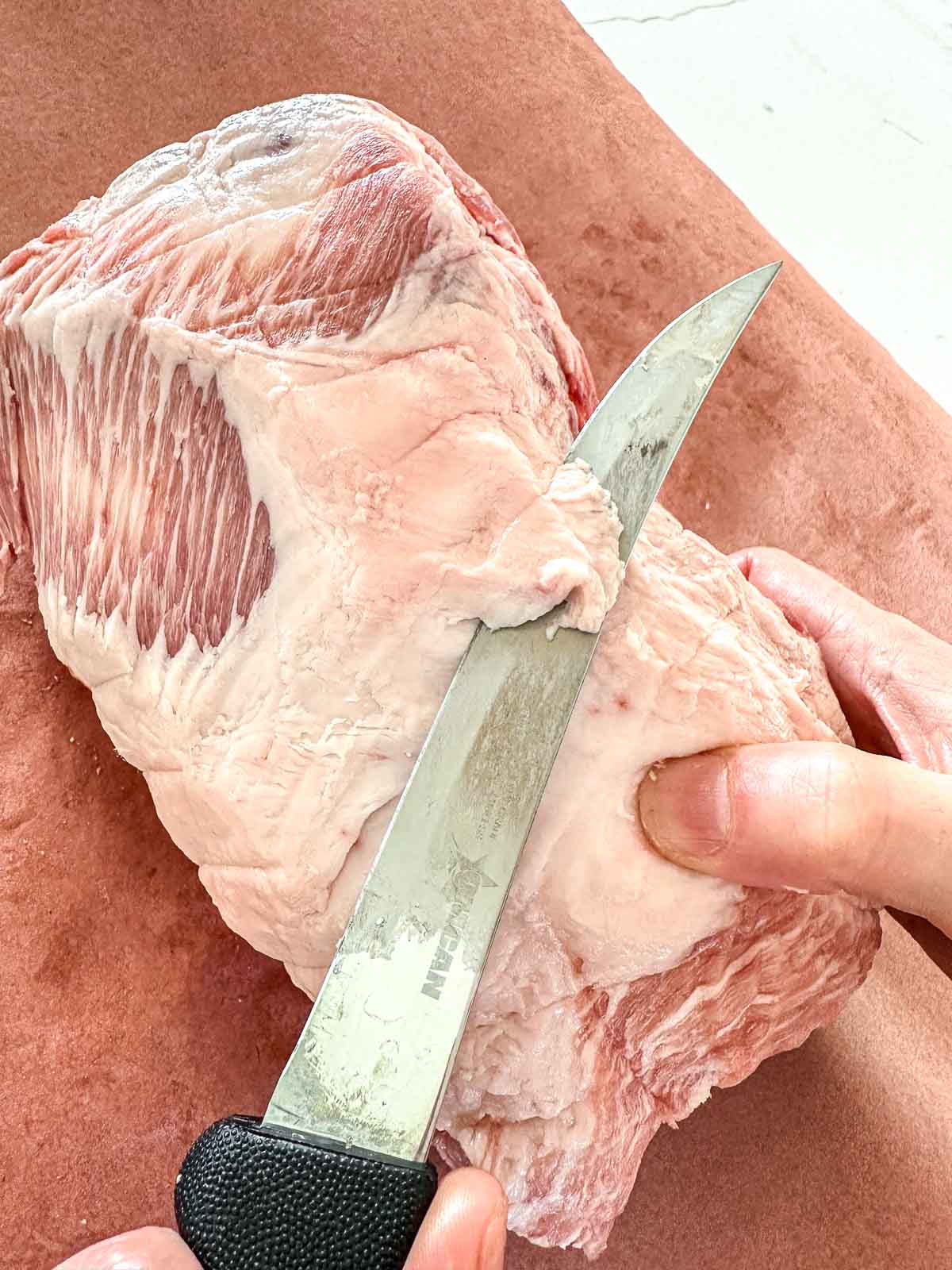
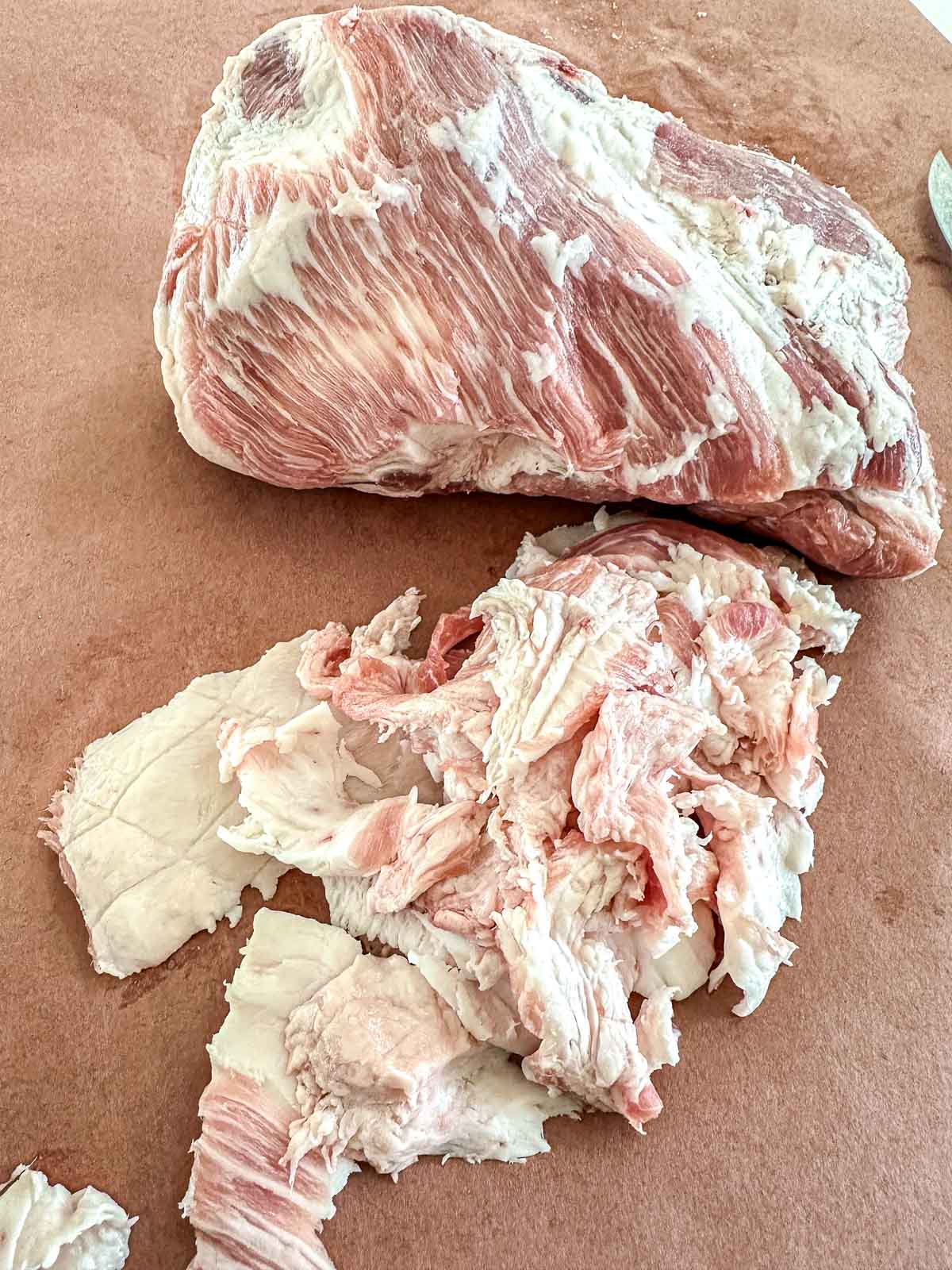
- Step 1: Trim the pork. Start by placing the boneless pork butt on a large cutting board. Trim off any thick, hard exterior fat, but don't strip it completely. Leave a thin layer behind. That little bit of fat helps protect the meat as it smokes and keeps everything tender. If the pork is uneven from the bone being removed, shape it so it cooks more evenly
- Step 2: Pat it completely dry. Use paper towels and really dry the surface on all sides. This step matters more than people think. A dry surface helps the bark develop properly instead of steaming.
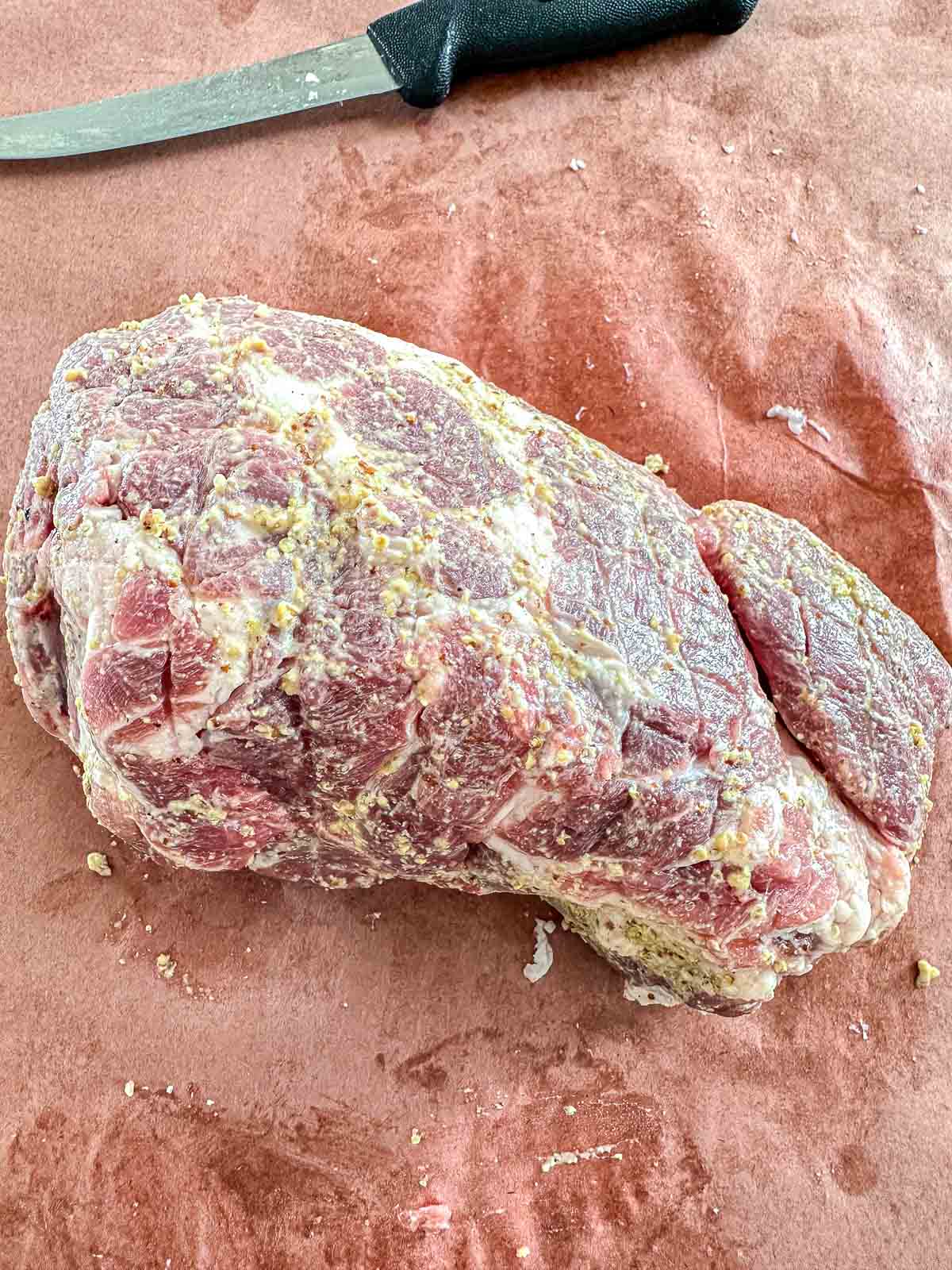
- Step 3: Add the mustard binder. Spread a thin layer of stone-ground mustard over the entire pork butt. You should barely see it. It's not there for flavor. It's there to help the seasoning stick and build that dark, flavorful crust.
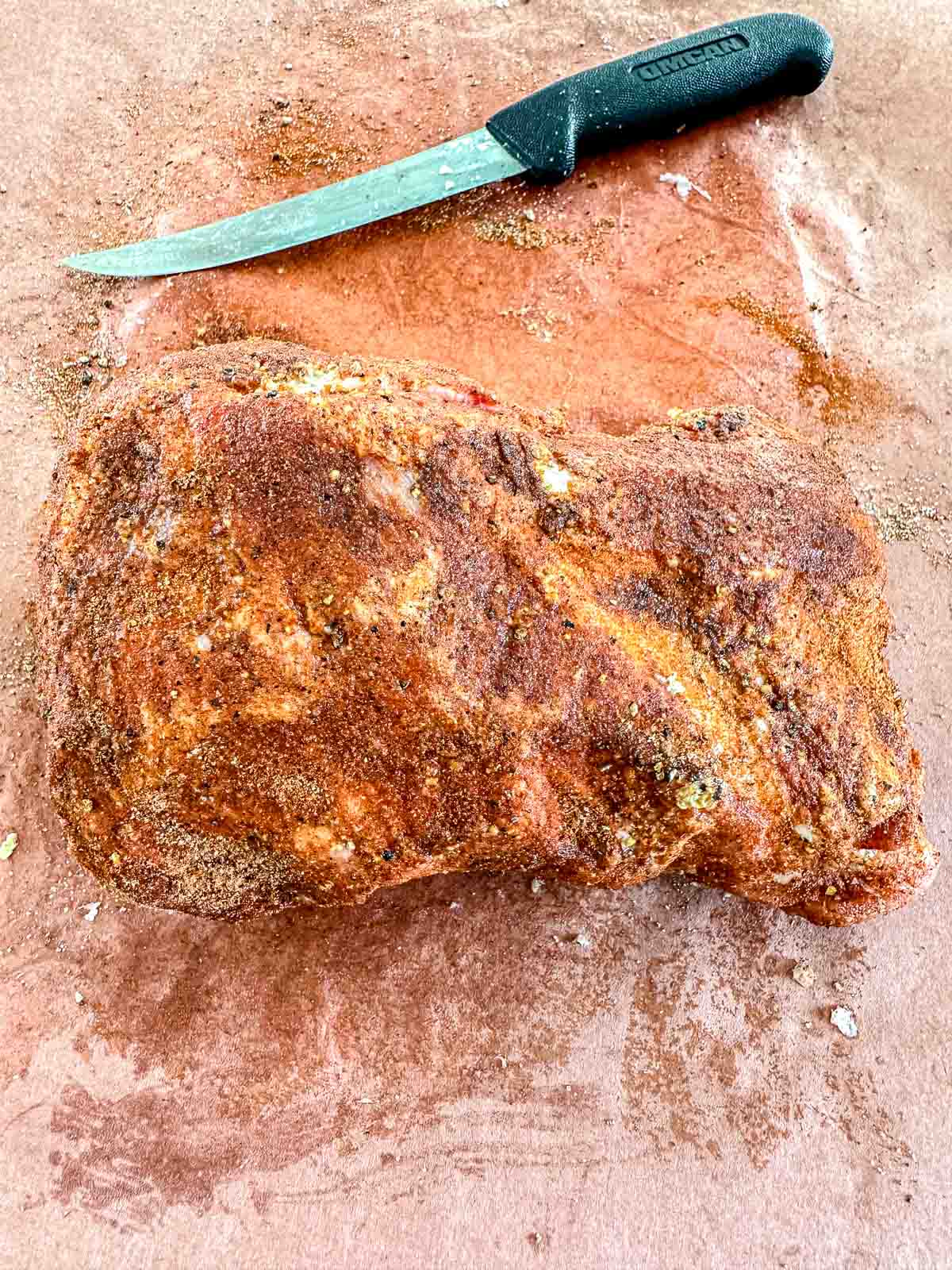
- Step 4: Season evenly. Sprinkle your homemade pulled pork rub over all sides and gently press it into the surface. Don't rub it around aggressively. Just press so it adheres. Let the pork rest uncovered for about 15 minutes while the smoker preheats. This gives the seasoning time to settle and turn slightly tacky.
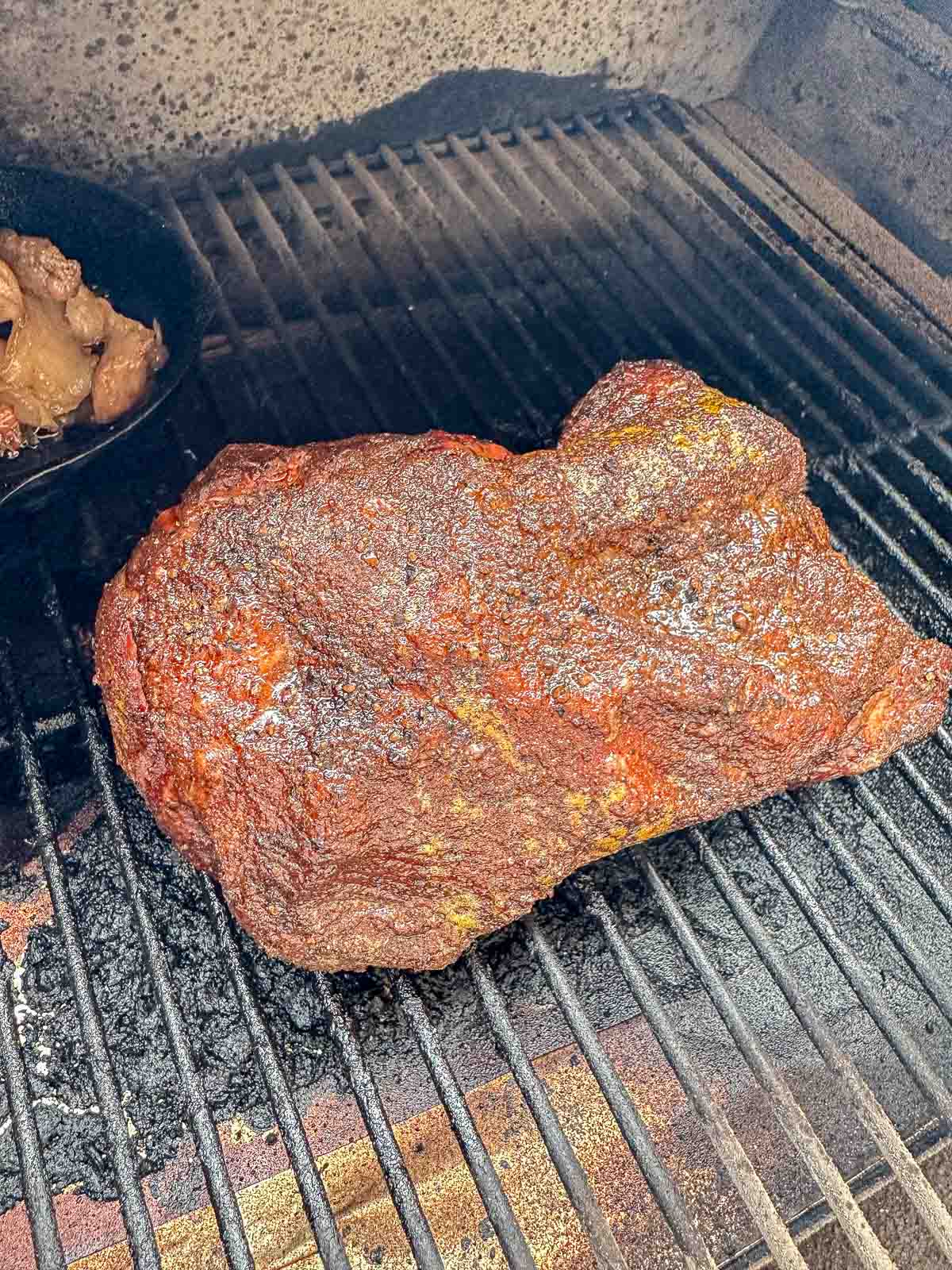
- Step 5: Smoke at 275°F. Place the pork butt directly on the smoker grates, fat side up. Close the lid and let it cook undisturbed. At 275°F, it will steadily build color and flavor without dragging the day out. After about 3 to 4 hours, start checking the internal temperature. You're looking for around 165 to 170°F and a bark that looks dark and set.
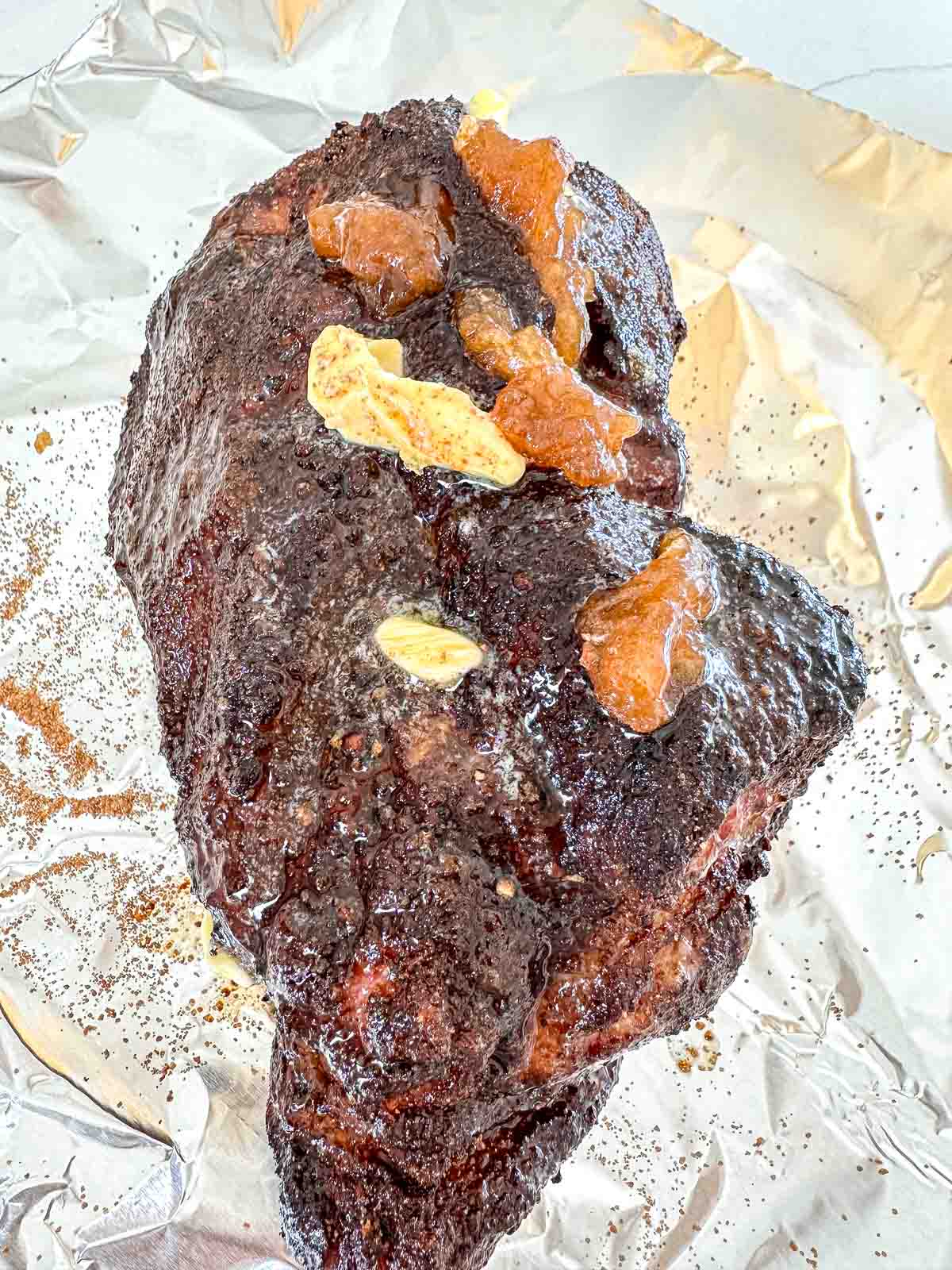
- Step 6: Wrap with butter and hot honey. Once the bark is where you want it, lay out three layers of heavy-duty foil. Place the pork in the center and top it with slices of butter, a drizzle of Mike's Hot Honey, and a small sprinkle of coconut sugar. Wrap it tightly so no steam escapes. This is where the pork transitions from smoky to tender.
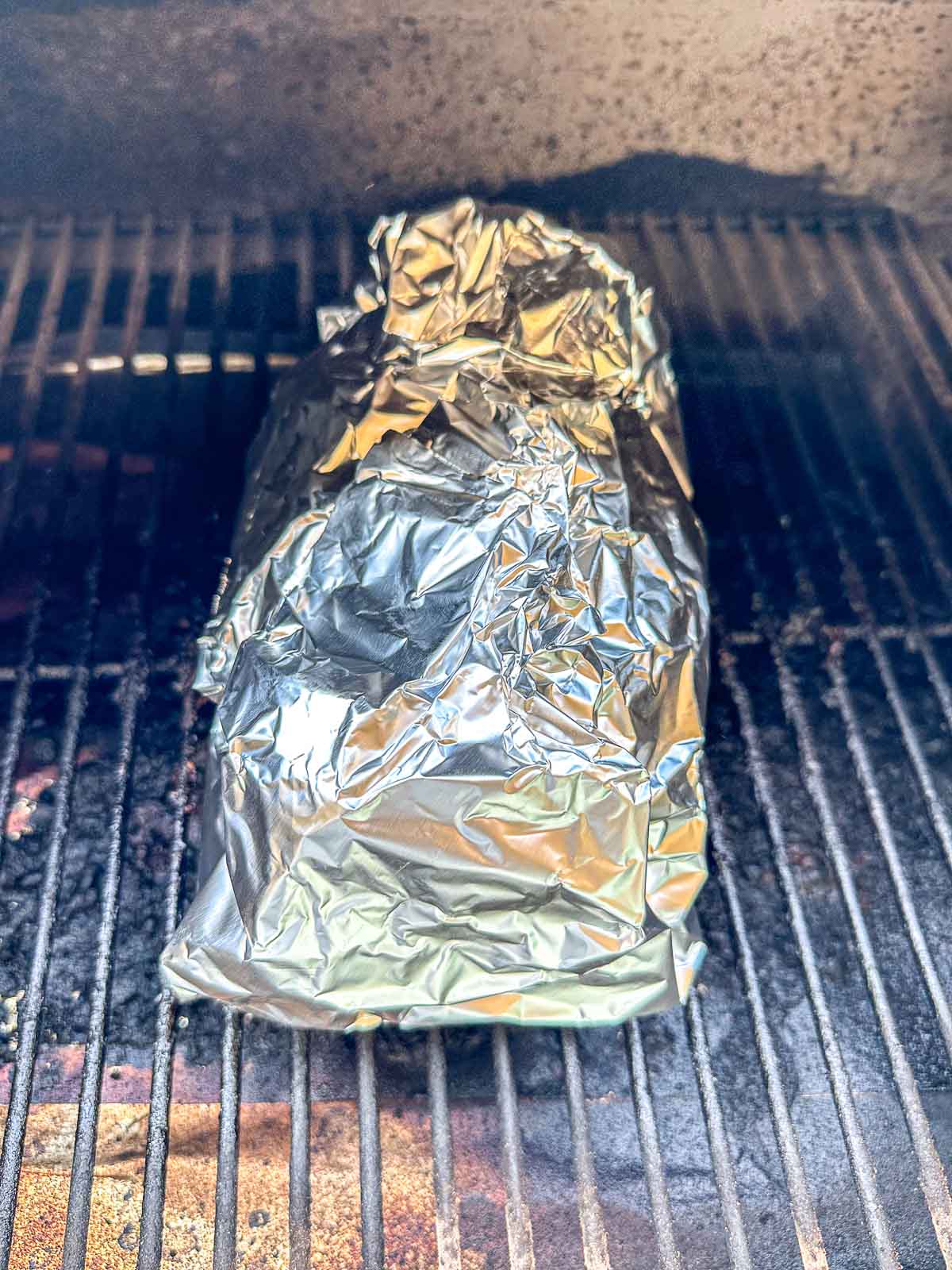
- Step 7: Finish cooking until tender. Return the wrapped pork to the smoker and continue cooking at 275°F for about 1.5-2 hours. Start checking for doneness once it reaches about 195°F. The final internal temperature will likely fall somewhere between 200 and 203°F, but what really matters is how it feels. The probe should slide in easily with very little resistance.
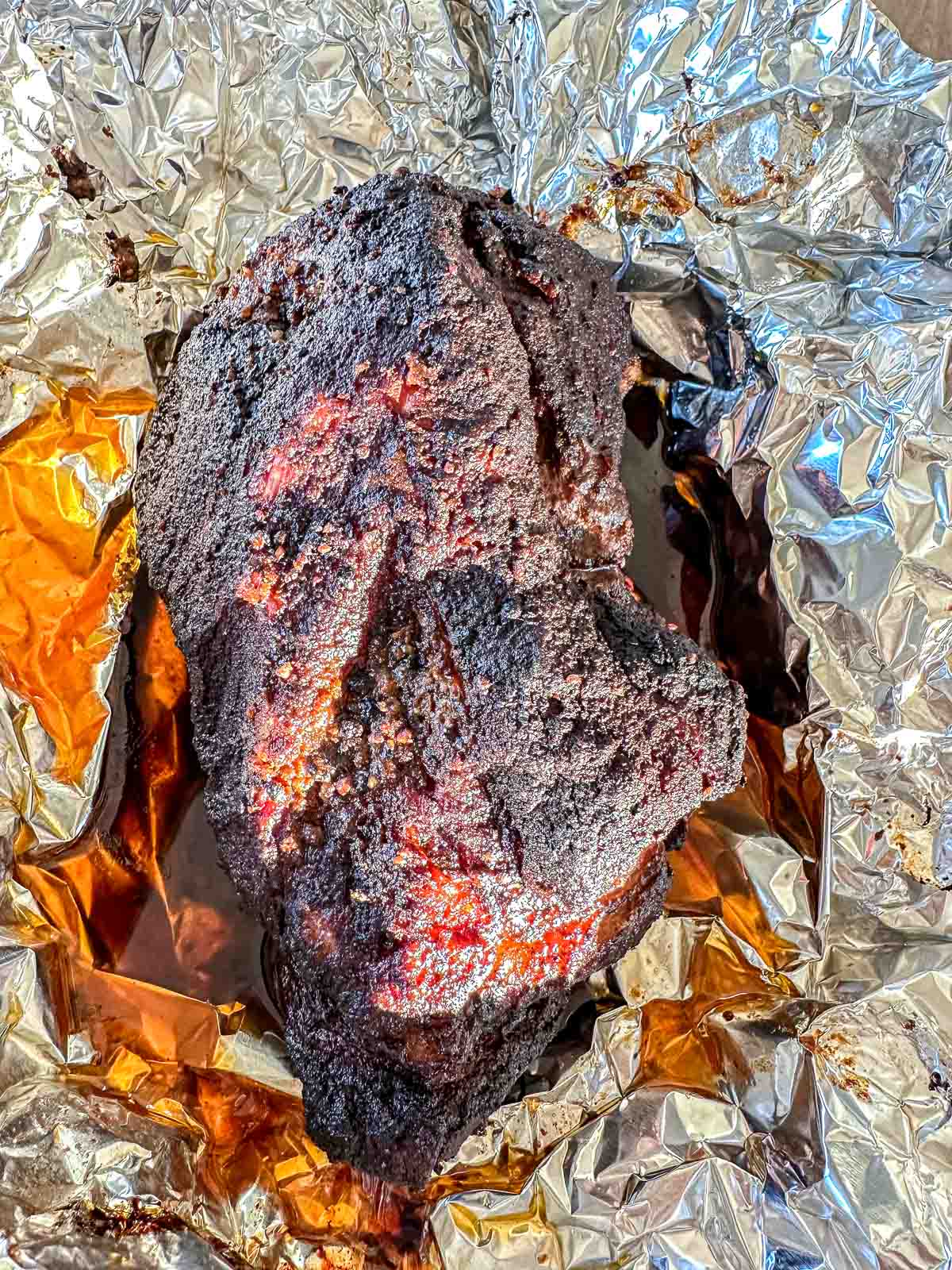
- Step 8: Let it rest, then shred
Remove the pork from the smoker and let it rest, still wrapped, for at least one hour. This gives the juices time to redistribute so they stay in the meat instead of running out when you shred it. After one hour, carefully unwrap the pork and pour the cooking juices into a bowl. Shred the meat using forks or meat claws, then slowly mix some of the reserved liquid back in until it's juicy and evenly coated. Taste and adjust with a pinch of salt if needed.
Best Pellets For Smoked Pork Butt
The type of wood pellets you use will influence the flavor of your smoked pork butt. Because pork has a mild flavor, it absorbs smoke really well, which gives you flexibility depending on how smoky you want the finished pulled pork to taste.
Here are some of the best pellet options for smoking pork butt:
- Post Oak: My go-to for a balanced, clean smoke that doesn't overpower the pork. It's subtle and lets the rub and meat shine through.
- Hickory: Bold and classic. Hickory adds a deeper, more traditional BBQ flavor if you like your pork a little smokier.
- Apple or Cherry: Mild and slightly sweet. These fruit woods pair beautifully with pork and complement the hot honey in the wrap.
- Pecan: Nutty and smooth. A nice middle ground between bold and mild smoke.
- Mesquite: Strong and earthy. I usually blend this with something milder to avoid overpowering the pork.
For this recipe, I usually reach for Post Oak or Apple pellets. Both add great smoke flavor without competing with the seasoning or the sweetness from the hot honey wrap.
Save This Recipe! 📧
Nadia's Expert Tips And Notes
- Buy the best pork you can find. This recipe is simple on purpose, so the quality of the meat really matters. When you start with pasture-raised pork from a source like ButcherBox, you can taste the difference. Better marbling means better texture, and better texture means you don't have to drown it in sauce later.
- Cook to tenderness, not just temperature. The temp for smoked pork butt will usually land somewhere between 200 and 203°F, but that number is just a guide. What you're really looking for is how it feels. When the probe slides into the thickest part with almost no resistance, like softened butter, it's ready.
- Don't rush the rest. This is where people get impatient. Letting the smoked pulled pork rest, still wrapped, gives the juices time to redistribute. If you shred too early, you'll see steam pouring out and moisture escaping. Give it at least an hour. It makes a difference.
- Trim only what won't render. You don't need to strip the pork bare. Remove thick, hard exterior fat, but leave a thin layer behind. That fat protects the meat and slowly renders during the cook, keeping the interior tender.
- Fat Side Up vs Fat Side Down. This is one of the most common questions when smoking pork butt. I cook mine fat side up so the fat slowly renders and bastes the meat as it cooks. On pellet grills like a Traeger, the heat comes from below, so the fat layer also helps protect the pork from direct heat.
- That said, both methods work. The most important thing is starting with a pork butt that has good marbling and cooking it until it's truly tender.
- Keep the lid closed. Especially if you're making Traeger smoked pork butt, every time you open the lid, you lose heat and extend your cook time. Trust the process. Let the smoker do its job.
- Balance bark and moisture intentionally. If you want softer, juicier pulled pork, use foil for the wrap. If you want a firmer bark and slightly drier exterior, use butcher paper. There isn't one right answer. It just depends on what kind of finish you prefer.
What To Serve With SMoked Pork Butt
This is one of those recipes that anchors the entire meal. Once the smoked pork butt is resting on the counter, you can build everything else around it, depending on the vibe. Casual backyard dinner, full Texas spread, or easy weeknight leftovers.
Here's how we usually serve it.
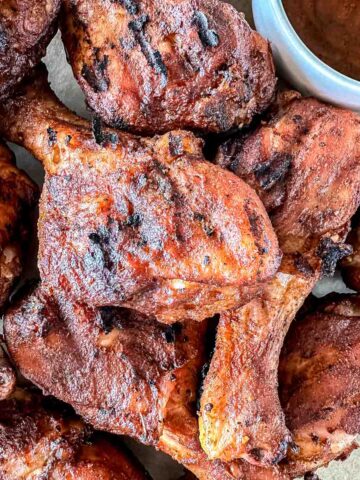
- Full Texas-Style Spread: If we're going all in, this smoked pulled pork butt sits right next to Smoked Chicken Drumsticks, Smoked Brisket and Smoked Baby Back Ribs. Add Smoked Green Beans, and Smashed Potato Salad, and you have that classic backyard BBQ feel without overcomplicating anything.
- Classic BBQ Plate: Keep it simple with Traeger Smoked Baked Potatoes and a crisp American coleslaw for contrast. The richness of the pork pairs beautifully with something fresh and crunchy. You don't need heavy sides because the pork carries so much flavor on its own.
- Pulled Pork Sandwiches: Pile the smoked pulled pork high on toasted brioche buns and top with a simple creamy coleslaw. My husband will tell you this is the test. If the pork is juicy enough to eat without extra sauce, you nailed it.
- BBQ Bowls: For a lighter option, serve the pork over roasted sweet potatoes or white rice with easy guacamole, pink pickled onions, and mango habanero salsa. This is how we usually eat leftovers during the week. It feels balanced but still satisfying.
- Taco Night: Warm tortillas, shredded pork, fresh cilantro, and a squeeze of lime. This is one of my favorite ways to use leftover smoked pulled pork shoulder. It keeps dinner easy without feeling repetitive.
Storage And Reheating
- Refrigerator: Store leftover smoked pulled pork in an airtight container in the refrigerator for up to 5 days.
- Freezer: Pulled pork freezes very well. Transfer cooled pork to freezer-safe bags or containers and freeze for up to 3 months. Thaw overnight in the refrigerator before reheating.
- Reheating: Warm the pork gently in a covered skillet over low heat with a splash of broth or some of the reserved cooking juices to keep it moist. You can also reheat it in the oven at 250°F, covered with foil, until warmed through.
Recipe FAQs
For this method, I prefer 275°F. It gives you a steady cook without dragging the day out, and it still produces great bark. A lot of smoked pulled pork recipes call for 225°F, which works, but it takes much longer. At 275°F, you get tender meat with a realistic cook time.
Wrap it once the bark is set, and the internal temperature is around 165 to 170°F. Don't wrap based on time alone. Look at the surface. It should be dark and firm, not wet or soft. That's when it's ready for the butter and hot honey wrap.
You're usually looking for somewhere between 200 and 203°F, but the number is just a guide. The real test is how it feels. If the probe slides in easily with very little resistance, it's done. If it still feels tight, give it more time.
Yes, absolutely. Bone-in smoked pork shoulder works beautifully and can even add a bit of extra insulation during the cook. Just plan for a slightly longer cook time and rely on tenderness instead of watching the clock.
Plan on about 6-7 hours total, including the wrapped phase, plus at least an hour to rest. Every piece of pork is a little different, so use temperature and tenderness as your guide rather than exact timing.
Dry smoked pulled pork usually comes from overcooking or not resting long enough. Another big factor is starting with lower-quality meat. Good marbling makes a difference. Cooking to tenderness, wrapping properly, and letting it rest are what keep this version juicy without needing heavy sauce.
Yes. This method works perfectly on a Traeger or any pellet grill. Just keep the lid closed as much as possible and maintain a steady temperature. Consistency is what gives you predictable results.
More Smoker Recipes You'll Love!



If you tried this recipe please leave a 🌟 star rating and let me know how it went in the 📝 comments below. You can also stay in touch through social media by following along on Instagram, Pinterest, YouTube, or Facebook. Thanks for visiting today!
Smoked Pork Butt (Juicy Pulled Pork Recipe)
Equipment
- 1 Traeger Grill or pellet smoker
Ingredients
- 4 pounds Boneless Pork Butt, pasture raised
- 2 tablespoons Stone Ground Mustard
- 3 tablespoons Pulled Pork Rub or your favorite BBQ Rub
- 3 tablespoons Unsalted Butter
- 2 tablespoons Hot Honey
- 1 teaspoon Coconut Sugar
Instructions
- Start by placing the boneless pork butt on a large cutting board. Trim off any thick, hard exterior fat, but don't strip it completely. Leave a thin layer behind. That little bit of fat helps protect the meat as it smokes and keeps everything tender. If the pork is uneven from the bone being removed, shape it so it cooks more evenly.4 pounds Boneless Pork Butt, pasture raised
- Use paper towels and really dry the surface on all sides. This step matters more than people think. A dry surface helps the bark develop properly instead of steaming.
- Spread a thin layer of stone-ground mustard over the entire pork butt. You should barely see it. It's not there for flavor. It's there to help the seasoning stick and build that dark, flavorful crust.2 tablespoons Stone Ground Mustard
- Sprinkle your homemade pulled pork rub over all sides and gently press it into the surface. Don't rub it around aggressively. Just press so it adheres. Let the pork rest uncovered for about 15 minutes while the smoker preheats. This gives the seasoning time to settle and turn slightly tacky.3 tablespoons Pulled Pork Rub
- Place the pork butt directly on the smoker grates, fat side up. Close the lid and let it cook undisturbed. At 275°F, it will steadily build color and flavor without dragging the day out. After about 3 to 4 hours, start checking the internal temperature. You're looking for around 165 to 170°F and a bark that looks dark and set.
- Once the bark is where you want it, lay out three layers of heavy-duty foil. Place the pork in the center and top it with slices of butter, a drizzle of Mike's Hot Honey, and a small sprinkle of coconut sugar. Wrap it tightly so no steam escapes. This is where the pork transitions from smoky to tender.3 tablespoons Unsalted Butter, 2 tablespoons Hot Honey, 1 teaspoon Coconut Sugar
- Return the wrapped pork to the smoker and continue cooking at 275°F for about 1.5-2 hours. Start checking for doneness once it reaches about 195°F. The final internal temperature will likely fall somewhere between 200 and 203°F, but what really matters is how it feels. The probe should slide in easily with very little resistance.
- Remove the pork from the smoker and let it rest, still wrapped, for at least one hour. This gives the juices time to redistribute so they stay in the meat instead of running out when you shred it. After one our carefully unwrap the pork and pour the cooking juices into a bowl. Shred the meat using forks or meat claws, then slowly mix some of the reserved liquid back in until it's juicy and evenly coated. Taste and adjust with a pinch of salt if needed.
Notes
- Buy the best pork you can find. This recipe is simple on purpose, so the quality of the meat really matters. When you start with pasture-raised pork from a source like ButcherBox, you can taste the difference. Better marbling means better texture, and better texture means you don't have to drown it in sauce later.
- Cook to tenderness, not just temperature. The temp for smoked pork butt will usually land somewhere between 200 and 203°F, but that number is just a guide. What you're really looking for is how it feels. When the probe slides into the thickest part with almost no resistance, like softened butter, it's ready.
- Don't rush the rest. This is where people get impatient. Letting the smoked pulled pork rest, still wrapped, gives the juices time to redistribute. If you shred too early, you'll see steam pouring out and moisture escaping. Give it at least an hour. It makes a difference.
- Trim only what won't render. You don't need to strip the pork bare. Remove thick, hard exterior fat, but leave a thin layer behind. That fat protects the meat and slowly renders during the cook, keeping the interior tender.
- Fat Side Up vs Fat Side Down. This is one of the most common questions when smoking pork butt. I cook mine fat side up so the fat slowly renders and bastes the meat as it cooks. On pellet grills like a Traeger, the heat comes from below, so the fat layer also helps protect the pork from direct heat. That said, both methods work. The most important thing is starting with a pork butt that has good marbling and cooking it until it's truly tender.
- Keep the lid closed. Especially if you're making Traeger smoked pork butt, every time you open the lid, you lose heat and extend your cook time. Trust the process. Let the smoker do its job.
- Balance bark and moisture intentionally. If you want softer, juicier pulled pork, use foil for the wrap. If you want a firmer bark and slightly drier exterior, use butcher paper. There isn't one right answer. It just depends on what kind of finish you prefer.

Leave a Reply