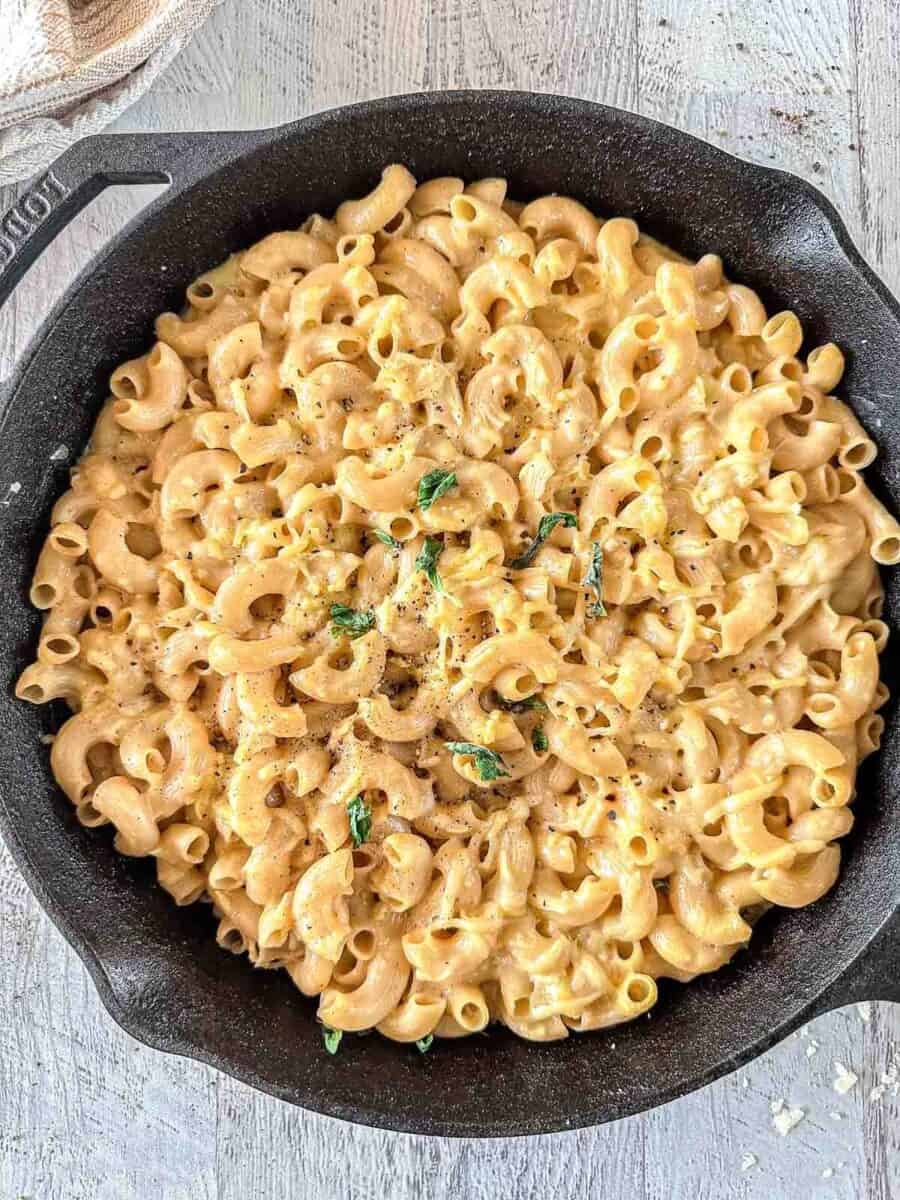
Smoked Mac and Cheese is a comfort food side dish made with pasta, a blended cottage cheese sauce, sharp cheddar, and Gruyere, cooked low and slow on a pellet grill until golden and gooey on top. It works well for backyard BBQs, holiday spreads, and anytime you're already firing up your Traeger for a main course. The secret is blended cottage cheese in place of Velveeta, which creates a naturally creamy, protein-rich sauce made entirely from real ingredients.
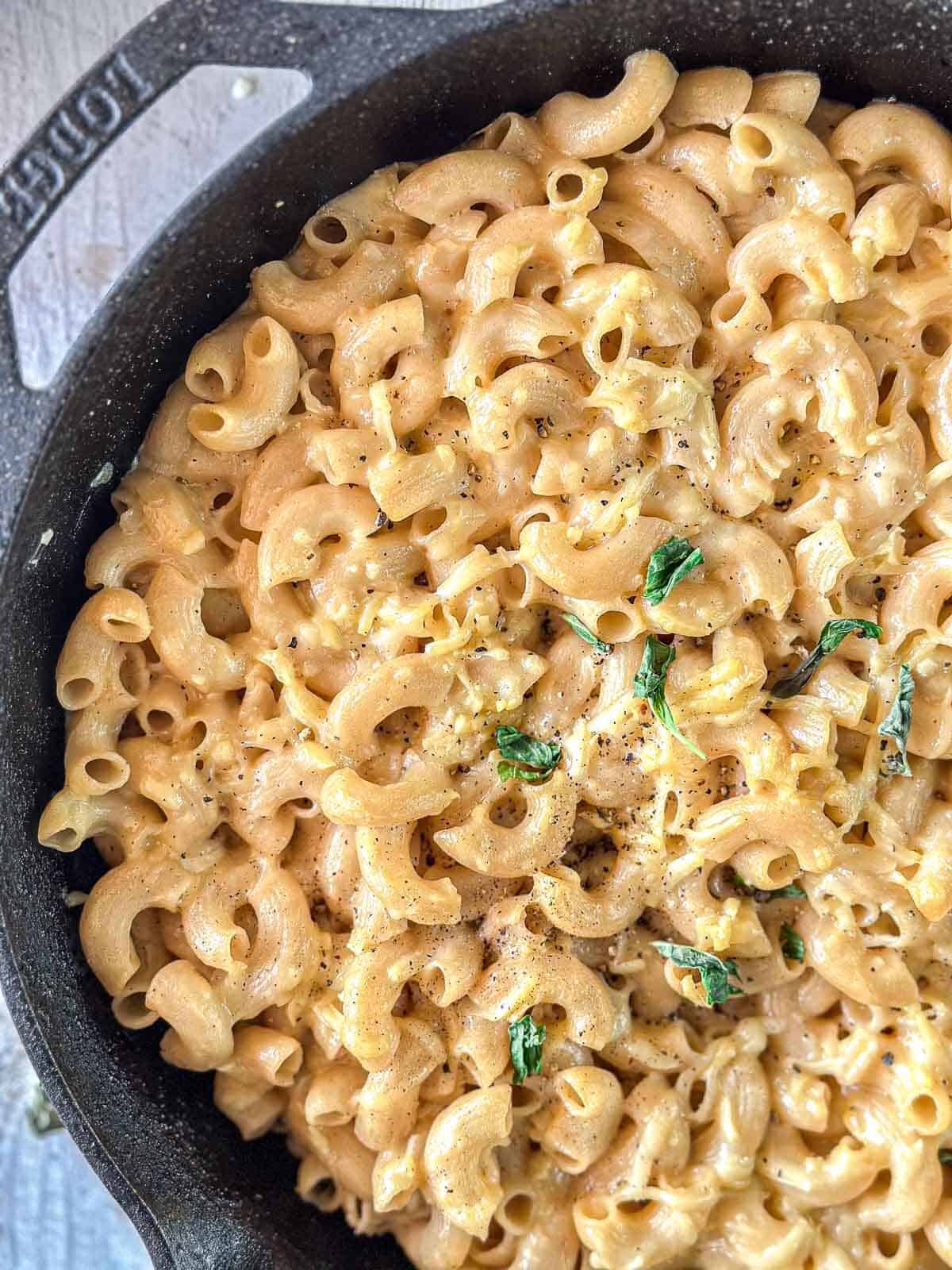
Recipe At A Glance
- 🔥 Method: Pellet smoker (Traeger or any brand)
- 🍳 Cookware: 12-inch cast iron skillet
- ⏱️ Total Time: About 1 hour 10 minutes
- 🧀 Best For: BBQs, holiday spreads, Thanksgiving, potlucks
- 👥 Serves: 8
- 🌿 Dietary: Easily made gluten-free
- ✨ What Makes It Different: Blended cottage cheese replaces Velveeta for a creamy, real-food sauce with extra protein
Here in Texas, smoked macaroni and cheese isn't just a fun twist; it's a tradition. We smoke our Thanksgiving dinner every year, and this smoked mac and cheese is always on the table alongside our Traeger Brisket, Traeger Scalloped Potatoes, and Smoked Green Beans. It's a staple on Memorial Day, too.
Most smoked mac and cheese recipes rely on Velveeta or processed cheese to keep the sauce creamy, but that's just not how I like to cook. I wanted a version made with real-food ingredients that still came off the smoker rich, gooey, and crowd-worthy.
Blended cottage cheese ended up being the trick. It gives the sauce body and creaminess without making the dish taste like cottage cheese. It also holds up well for holiday prep, which is a lifesaver when the smoker is already full.
If you've ever pulled smoked mac and cheese off the grill only to find the sauce oily, grainy, or dried out, you're not alone. That usually comes down to the cheese sauce base and smoker temperature. As a nutrition coach, I wanted a real-food fix that still came off the smoker creamy, gooey, and crowd-worthy.
If you are looking for more easy smoker sides, check out reader favorites like Traeger Baked Potatoes, Smoked Baked Beans, Traeger Smoked Queso Without Velveeta, or Traeger Smoked Asparagus.
Jump to:
- Recipe At A Glance
- Ingredients You'll Need
- Substitutions And Variations
- Optional Toppings & Add-Ins
- Best Cheese For Smoked Mac And Cheese
- How to Get a Creamy Smoked Mac and Cheese (Without the Sauce Breaking)
- How to Make Smoked Mac And Cheese
- Holiday Make-Ahead Plan
- Nadia's Expert Tips For Traeger Smoked Mac And Cheese
- How Long To Smoke Mac And Cheese
- What To Serve With Smoked Macaroni And Cheese
- Storage And Reheating
- Recipe FAQs
- More Smoker Recipes You'll Love!
- Creamy Smoked Mac and Cheese (No Velveeta)
Ingredients You'll Need
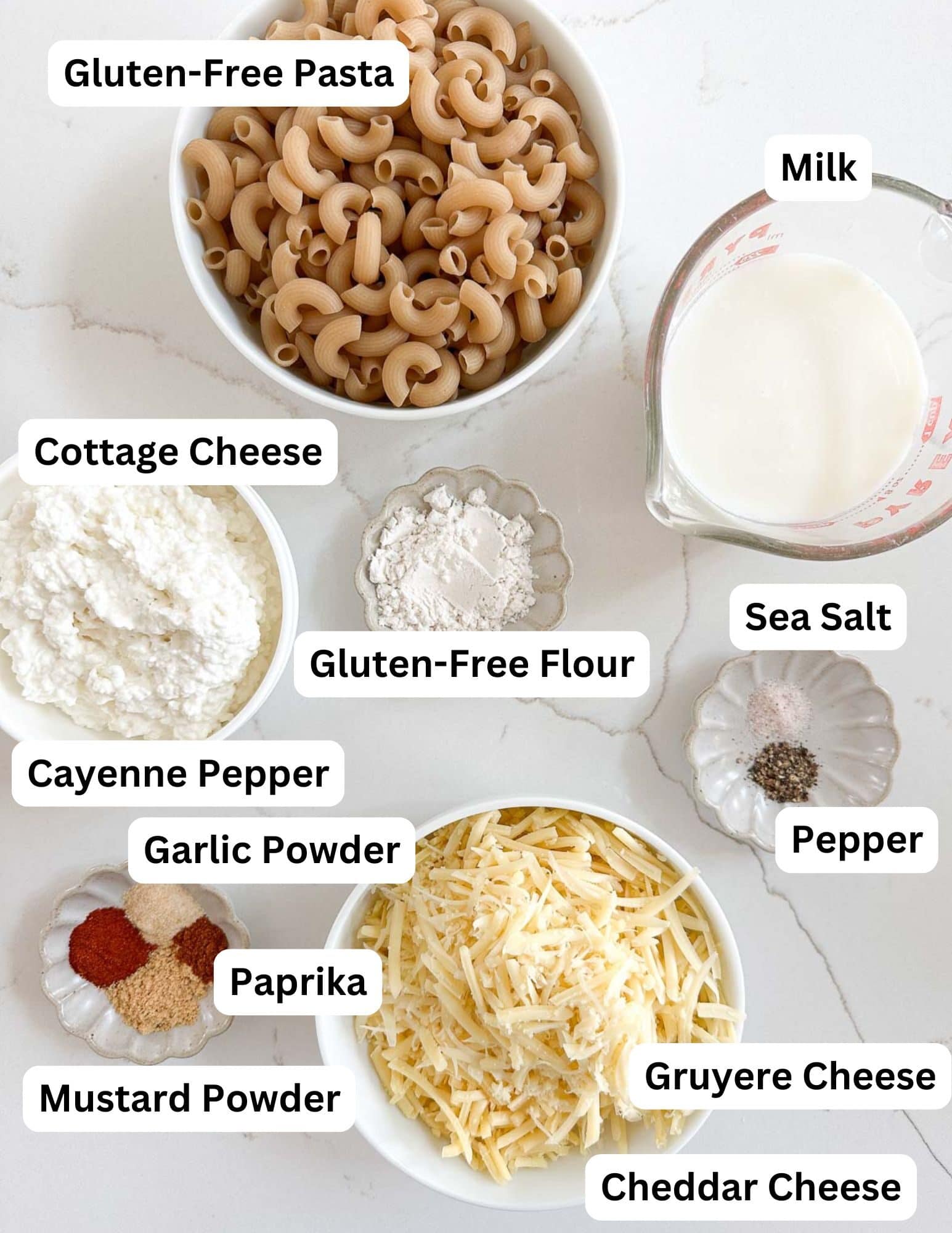
- Cottage Cheese: This is my real-food swap for Velveeta. Use full-fat or 2% cottage cheese and blend it until completely smooth before adding it to the sauce. I do not recommend fat-free cottage cheese because it will not give you the same rich, creamy texture.
- Milk: Whole milk adds richness and helps loosen the sauce so it coats the pasta evenly. Grass-fed whole milk is my favorite here, but any whole milk will work.
- Cheese (Sharp Cheddar + Gruyere): Sharp cheddar gives you that classic mac and cheese flavor, while Gruyere adds a rich, nutty depth that works really well with smoke. For the smoothest sauce, shred the cheese yourself from a block. If you're out of Gruyere, Gouda, Monterey Jack, Havarti, or Fontina can work too.
- Gluten-Free Flour: Helps thicken and stabilize the sauce so it coats the pasta well. I like Bob's Red Mill, but regular all-purpose flour also works if you are not gluten-free.
- Garlic Powder, Paprika, and Mustard Powder: These pantry staples add a ton of flavor. The garlic gives a subtle savory note, paprika brings a little warmth and color, and the mustard powder adds just the right amount of zip.
- Sea Salt and Black Pepper: For seasoning the sauce just right. Taste and adjust as needed!
- Gluten-Free Pasta: I love using elbow macaroni or small shells-something with crevices that holds onto all that cheesy sauce. Jovial's brown rice or cassava pasta are my go-tos. If you tolerate gluten, regular pasta works just fine!
See the recipe card for full information on ingredients and quantities.
Substitutions And Variations
- Cheese Swap: Feel free to mix it up depending on what you have on hand. Gouda, Havarti, Monterey Jack, or even a little Fontina can all work great. I still like to keep one bold cheese (like sharp cheddar) in the mix to balance out the meltier, milder ones.
- No Smoker? No problem. You can still get a delicious baked version by popping it in the oven at 375°F until bubbly and golden brown, usually around 25-30 minutes. It won't have that smoke flavor, but it'll still be cheesy, cozy, and totally worth it.
Level Up
Optional Toppings & Add-Ins
This smoked mac and cheese is rich and creamy as written, but you can easily make it more BBQ-style with a few extras. Try a buttery breadcrumb topping for crunch, chopped smoked brisket or pulled pork to make it heartier, crispy bacon for a salty bite, diced jalapeños or green chiles for heat, or a light sprinkle of your favorite BBQ rub before it goes on the smoker.
Best Cheese For Smoked Mac And Cheese
Use a mix of sharp cheese and good melting cheese. Sharp cheddar gives classic mac and cheese flavor, while Gruyere melts beautifully and adds a rich, nutty flavor that works well with smoke. Gouda, Monterey Jack, Havarti, or Fontina are good swaps if you want a milder, meltier sauce.
How to Get a Creamy Smoked Mac and Cheese (Without the Sauce Breaking)
The biggest complaint about smoked mac and cheese is a sauce that turns oily, grainy, or separated by the time it comes off the grill. Here's how to prevent that.
- Blend your cottage cheese until smooth. Don't add it straight from the container. A quick blitz in the blender or food processor gives you a silky, lump-free base that holds up beautifully under low smoker heat.
- Shred your own cheese. Pre-shredded cheese is coated with anti-caking agents that prevent it from melting cleanly. Block cheese, shredded fresh, melts into the sauce without clumping or graining.
- Keep the heat low. A cheese sauce that gets too hot can break. Keep the smoker at 225°F and avoid cranking the heat to speed things up.
- Cook your pasta al dente. The noodles keep cooking in the smoker. If they go in fully cooked, they'll turn mushy and absorb too much sauce, leaving you with a dry finished dish.
- Skip fat-free cottage cheese. The fat is what keeps the sauce rich and smooth. Full-fat or 2% cottage cheese only.
How to Make Smoked Mac And Cheese
This is an overview with step-by-step photos. Full ingredients & instructions are in the recipe card below.
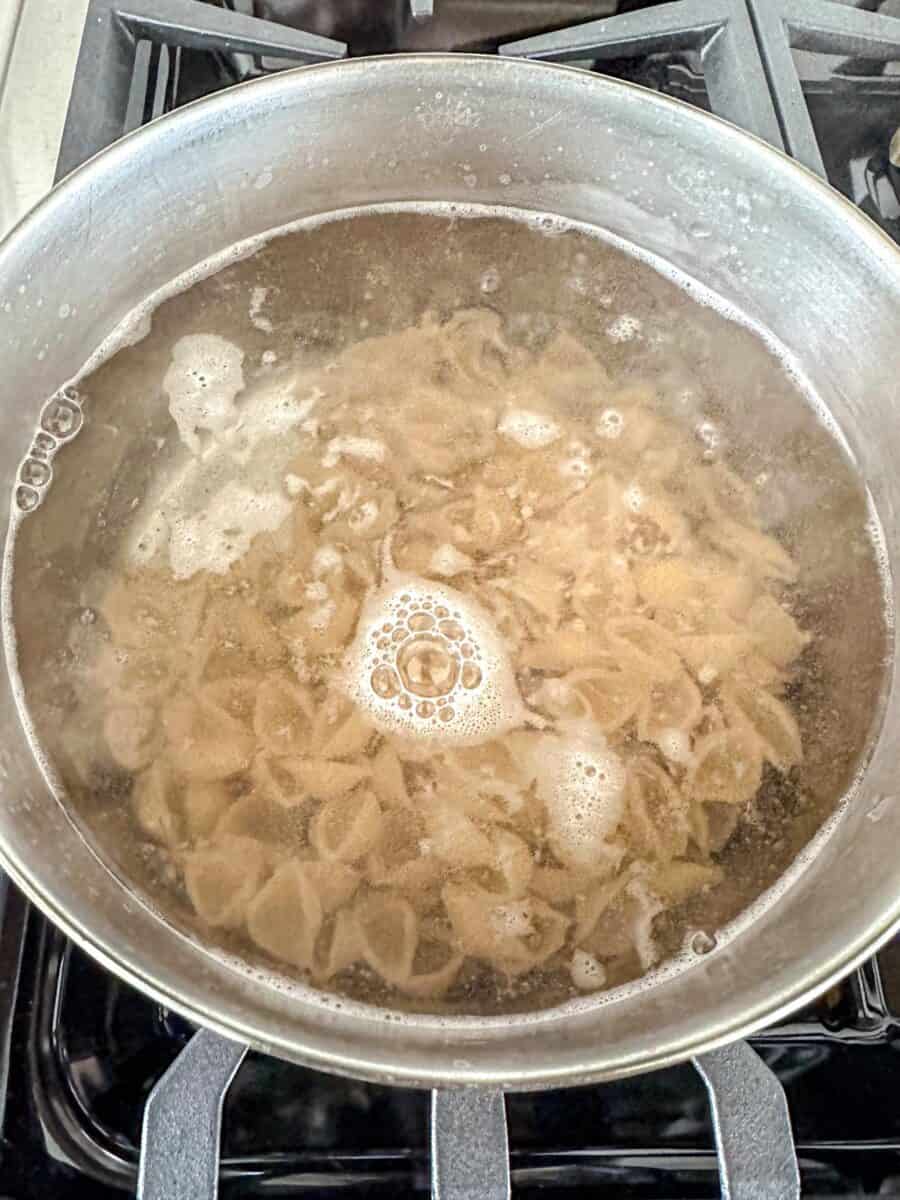
Step 1. Heat a large pot of water over high heat. Once the water has come to a boil, add a generous pinch of sea salt and add your pasta to the boiling water. Cook the pasta to al dente according to the package directions. Be sure to reserve some of the pasta water, as you may want to use it to thin the sauce out.
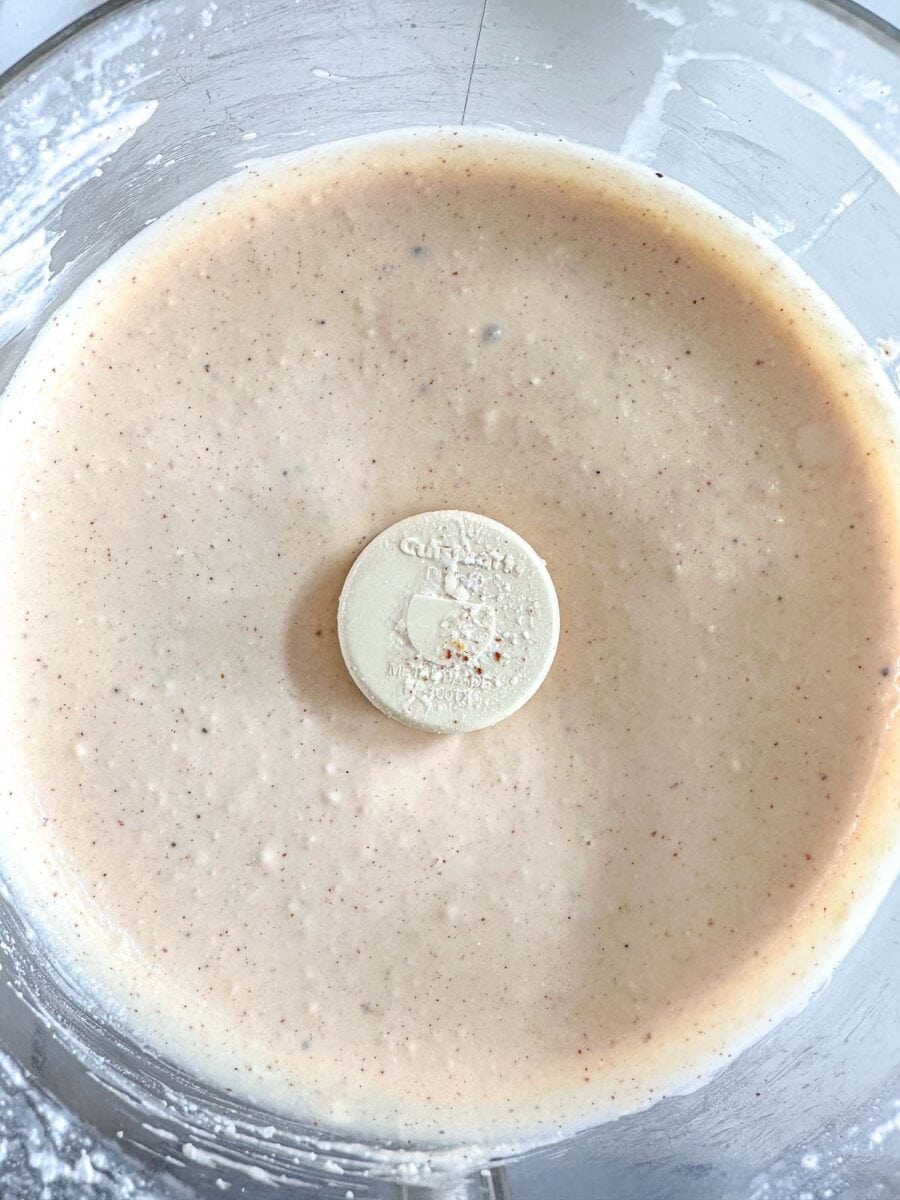
Step 2. While the pasta is cooking, add the cottage cheese, milk, ¾ of the shredded cheddar, ¾ of the shredded gruyere, gluten-free flour, garlic powder, paprika, mustard powder, cayenne pepper, sea salt, and black pepper to the bowl of a food processor. Blend the cottage cheese mixture until it is smooth and creamy. Taste for seasonings and adjust as needed.
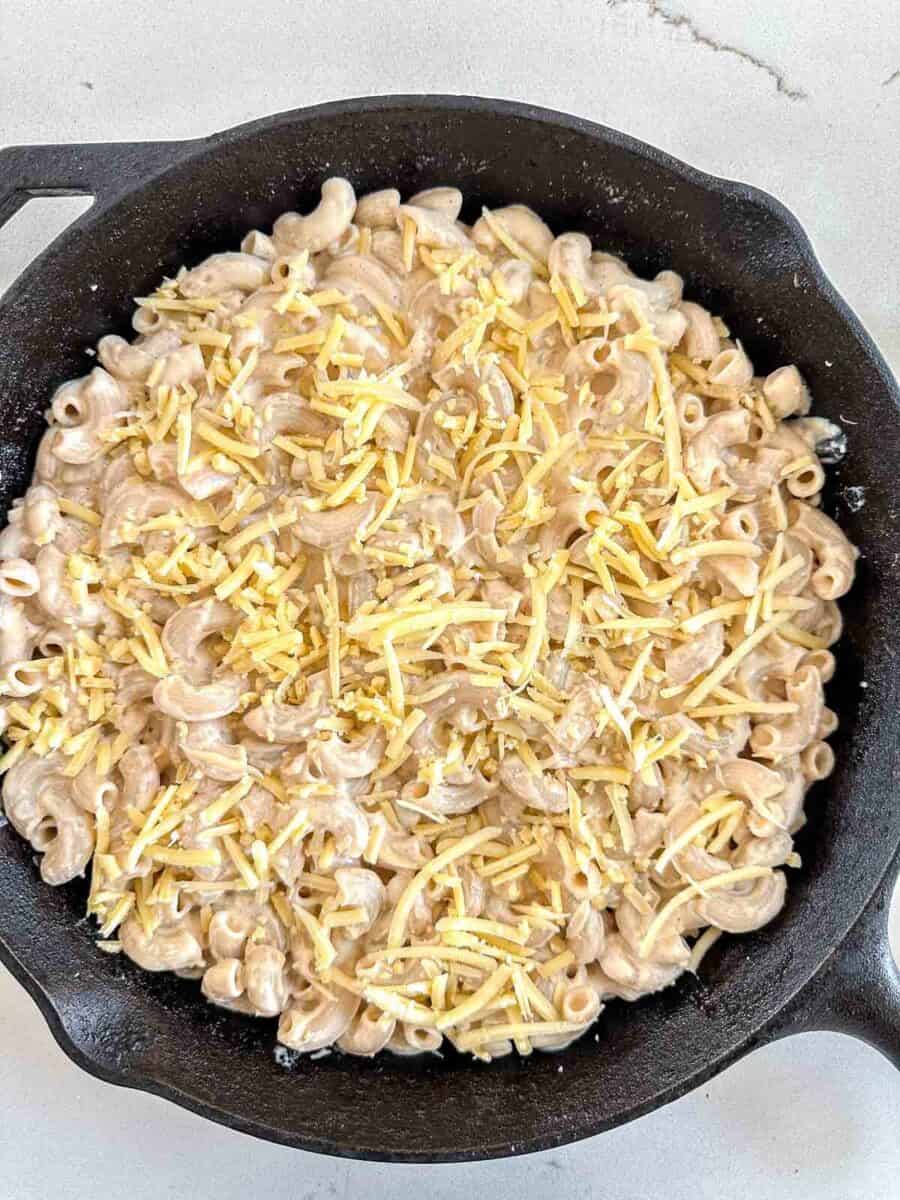
Step 3. Once the pasta is done cooking, drain it well and add it to a large bowl. Pour the blended cheese sauce over the cooked pasta and toss to combine. Transfer the pasta to a greased large cast-iron skillet. Spread the pasta mixture evenly across the pan. Top with the remaining grated cheese.
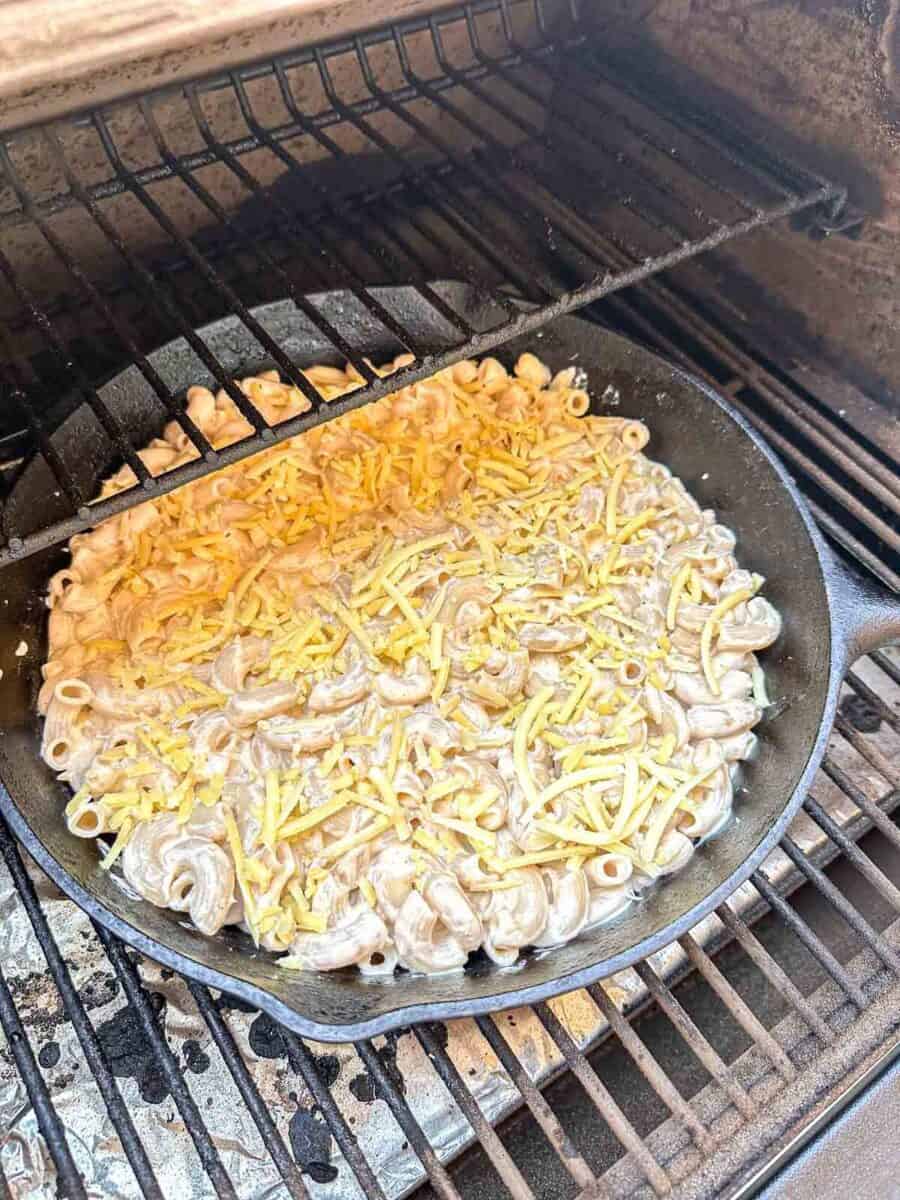
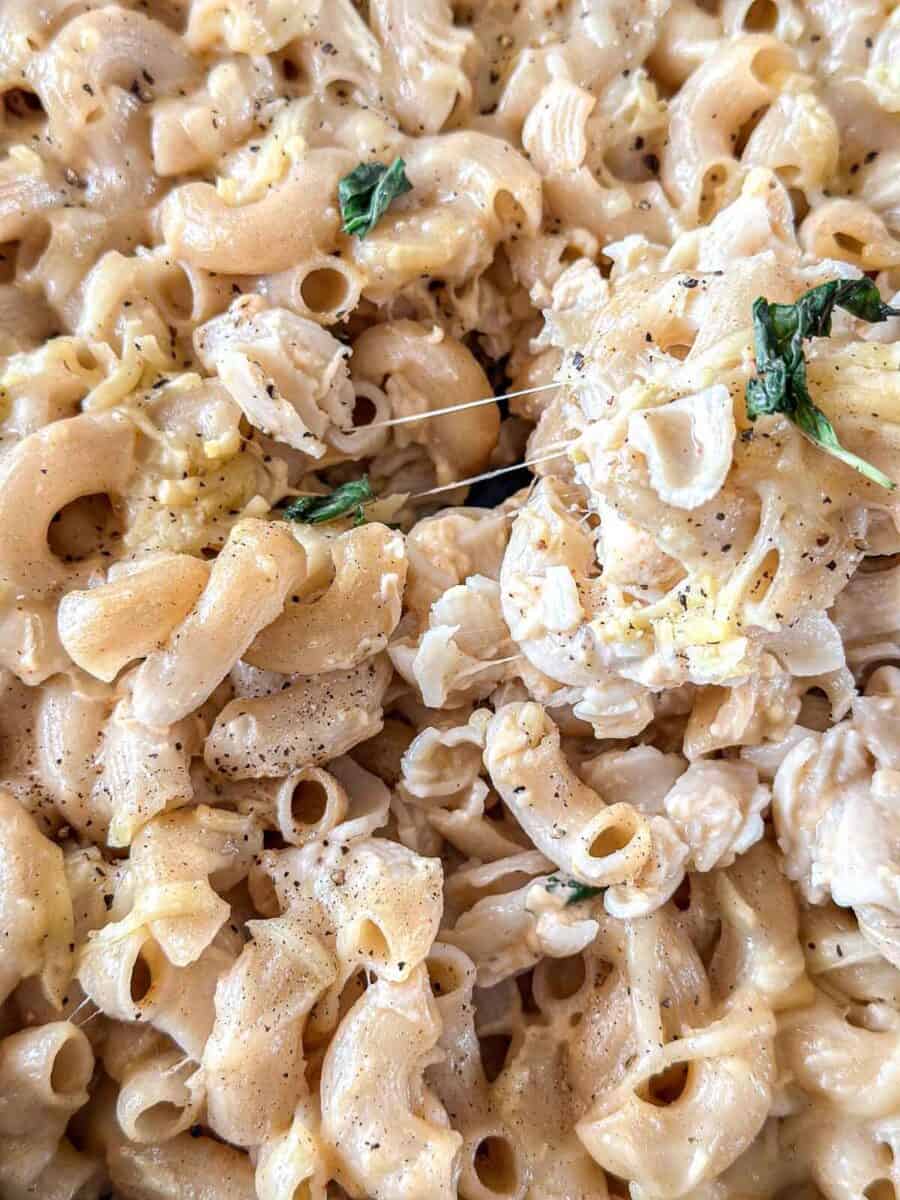
Step 4. Place your cast iron skillet on the grill grates of your Traeger and smoke at 225 degrees for 1 hour.
Holiday Make-Ahead Plan
This is one of my favorite make-ahead smoker sides for Thanksgiving, Memorial Day, and BBQs because you can assemble it the day before and smoke it right before serving.
Here's how you can plan ahead:
| Holiday Prep | Timing |
|---|---|
| Boil the pasta and blend the cheese sauce. Assemble everything in your cast-iron skillet. | The day before your big feast (Memorial Day, Thanksgiving, or Christmas). |
| Cover tightly and refrigerate overnight. | Before you head to bed. |
| Let it sit out on the counter while you fire up the smoker. | About an hour before dinner. |
| Smoke at 225°F for 1 hour until hot, gooey, and golden. | Just before the meal hits the table. |
This make-ahead method is a game-changer when you're cooking multiple dishes. It frees up space (and mental energy!) so you can actually enjoy the holiday too.
Nadia's Expert Tips For Traeger Smoked Mac And Cheese
- Choose a mild wood. Apple, cherry, or pecan work best because they add smoke without overpowering the cheese. Hickory is stronger, so use it only if you want a bolder BBQ flavor.
- Double the batch. This dish is made for feeding a crowd. Whether you're hosting Thanksgiving, a summer BBQ, or a potluck with friends, this one always disappears fast. You can easily double it and use a large foil pan if you're cooking for a big group.
Save This Recipe! 📧
How Long To Smoke Mac And Cheese
At 225°F, smoked mac and cheese takes about 1 hour. That's enough time for the top to turn golden, the edges to bubble, and the pasta to absorb a rich layer of smoke flavor without drying out. A few variables can affect that timing:
| Variable | Timing |
|---|---|
| Standard (225°F, room temp, cast iron) | 60 minutes |
| Deeper smoke flavor | 60-75 minutes |
| Smoker running hot (10-15°F above set temp) | Check at 45 minutes |
| Dish assembled cold from fridge | Add 10-15 minutes |
| Deep foil pan vs. cast iron skillet | Add 10-15 minutes |
You're looking for a lightly golden top with glossy, bubbling edges. If the top looks dark or the sauce looks dry around the edges, pull it.
What To Serve With Smoked Macaroni And Cheese
This dish doesn't just hold its own; it's a total team player on the table. Whether you're building out your Thanksgiving lineup or pulling together a summer BBQ, here are some of my favorite ways to round out the meal:
- Holiday Mains: We always serve this with Traeger Smoked Brisket during the holidays, but it also pairs well with Traeger Smoked Turkey, Smoked Boneless Chicken Thighs, Traeger Smoked Ham, or Smoked Ribs. Basically, if it came off the smoker or out of the oven, this mac belongs next to it.
- Vegetables: Balance the richness with something green. Smoked Green Beans are our go-to, but Maple Roasted Brussels Sprouts, Hot Honey Brussels Sprouts, Smoked Zucchini, or a harvest-style salad like Butternut Squash and Feta Salad would all work beautifully.
- BBQ Sides: For a cookout, serve it alongside classics like Potato Salad with Spring Onions, Dairy Free Coleslaw, Elote Pasta Salad, Traeger Baked Beans, or Smoked Asparagus.
- Beverages: Keep it casual with sparkling water or sweet tea, or lean into the comfort food vibes with a crisp hard cider or a chilled glass of wine. This dish is rich, so something light and refreshing works best.
Storage And Reheating
- Storage: If you've got leftovers (which honestly doesn't happen too often around here), keep them in an airtight container in the fridge for up to 4 days.
- Reheating: To bring it back to life, warm it in the oven at 325 degrees F until hot and bubbly. If it looks a little dry, stir in a splash of milk before reheating.
Recipe FAQs
Applewood and cherry are the best choices for smoked mac and cheese. Both are mild and slightly sweet, which lets the cheese flavor come through without the smoke overpowering it. Pecan is a solid middle ground with a slightly nuttier tone. Hickory works if you love bold BBQ flavor, but use it carefully as it can turn bitter with a dairy-based dish if the smoke is too heavy. For holidays when this is sitting next to brisket or turkey, applewood is the move. It adds just enough smoke without competing with everything else on the table.
Yes. This recipe uses blended cottage cheese instead of Velveeta to create a smooth, creamy sauce with real-food ingredients. Once blended with milk, cheddar, and Gruyere, the cottage cheese becomes mild and creamy, not chunky or tangy.
Yes. Assemble it up to 24 hours ahead, cover tightly, and refrigerate. Let it sit at room temperature while the smoker preheats, then smoke at 225°F until hot, bubbly, and golden. If it goes on the smoker cold, plan to add 10-15 minutes.
Yes. When full-fat or 2% cottage cheese is blended until smooth, it creates a creamy base that melts into the cheddar and Gruyere. The flavor is mild, so it does not make the mac and cheese taste like cottage cheese.
Elbow macaroni is the classic choice and works well here. Small shells are another great option because the curves and ridges hold onto the cheese sauce in every bite. Whatever shape you choose, look for something small with some texture or a hollow center so the sauce has somewhere to cling. For gluten free, Jovial's brown rice elbows or cassava pasta both hold up well in the smoker without turning mushy. Avoid large pasta shapes like rigatoni or penne; they don't coat as evenly and can make the dish feel unbalanced.
Absolutely. Any pellet grill or smoker with temperature control will work great for this dish. While it's written as a Traeger smoked mac and cheese recipe, you can easily adapt it to Pit Boss, Camp Chef, or even a traditional offset smoker.
Cook the pasta al dente, use enough sauce, and smoke it low at 225°F just until the edges are bubbling and the top is lightly golden. If the sauce looks dry before smoking, stir in a splash of milk or reserved pasta water before it goes on the grill.
Smoked mac and cheese absorbs wood-fired flavor as it cooks low and slow, while baked mac and cheese gets its flavor mostly from the cheese sauce and golden top. The smoker also gives the edges a lightly smoky, bubbly finish that you do not get from the oven.
More Smoker Recipes You'll Love!

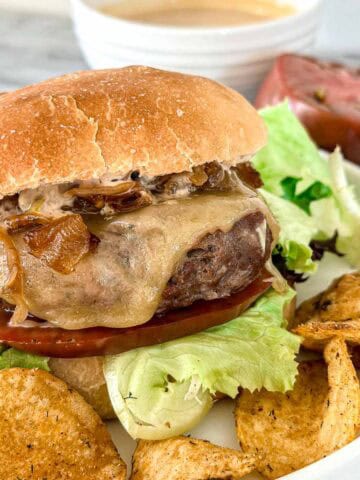
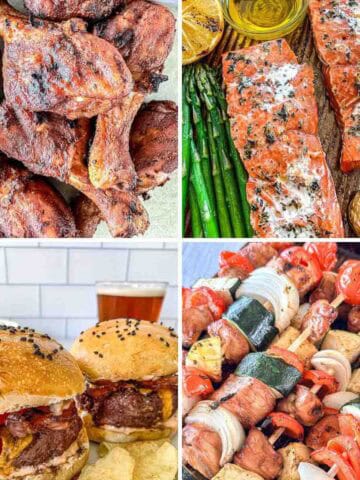
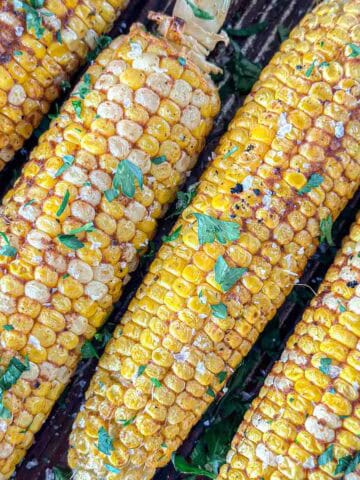
If you tried this recipe please leave a 🌟 star rating and let me know how it went in the 📝 comments below. You can also stay in touch through social media by following along on Instagram, Pinterest, YouTube, or Facebook. Thanks for visiting today!
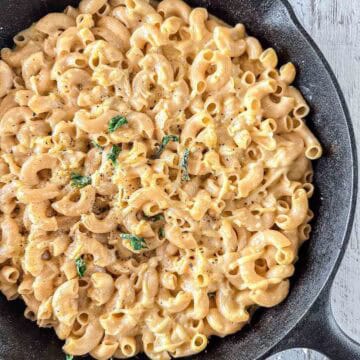
Creamy Smoked Mac and Cheese (No Velveeta)
Ingredients
- 1.25 cups Cottage Cheese
- 1 cup Whole Milk
- 1.5 cups Cheddar Cheese sharp
- ¾ cup Gruyère Cheese
- 1 tablespoons Gluten-Free Flour
- ½ teaspoon Garlic Powder
- ½ teaspoon Smoked Paprika
- ½ teaspoon Mustard Powder
- ¼ teaspoon Cayenne Pepper
- ¼ teaspoon Sea Salt
- ¼ teaspoon Pepper
- 12 oz Gluten-Free Pasta
Instructions
- Heat a large pot of water over high heat. Once the water has come to a boil, add a generous pinch of sea salt and add your pasta to the boiling water. Cook the pasta to al dente according to the package directions. Be sure to reserve some of the pasta water, as you may want to use it to thin the sauce out.12 oz Gluten-Free Pasta
- While the pasta is cooking, add the cottage cheese, milk, ¾ of the shredded cheddar, ¾ of the shredded gruyere, gluten-free flour, garlic powder, paprika, mustard powder, cayenne pepper, sea salt, and black pepper to the bowl of a food processor. Blend the cottage cheese mixture until it is smooth and creamy. Taste for seasonings and adjust as needed.1.25 cups Cottage Cheese, 1 cup Whole Milk, 1.5 cups Cheddar Cheese, ¾ cup Gruyère Cheese, 1 tablespoons Gluten-Free Flour, ½ teaspoon Garlic Powder, ½ teaspoon Smoked Paprika, ½ teaspoon Mustard Powder, ¼ teaspoon Cayenne Pepper, ¼ teaspoon Sea Salt, ¼ teaspoon Pepper
- Once the pasta is done cooking, drain it well and add it to a large bowl. Pour the blended cheese sauce over the cooked pasta and toss to combine. Transfer the pasta to a greased large cast-iron skillet. Spread the pasta mixture evenly across the pan. Top with the remaining grated cheese.
- Place your cast iron skillet on the grill grates of your Traeger and smoke at 225 degrees for 1 hour.
Notes
- Skip fat-free cottage cheese. You need that little bit of fat to help the sauce stay creamy and rich, especially once it hits the smoker, so stick with full-fat or low-fat.
- Always shred your cheese fresh. I know it's tempting to grab the bagged stuff, but pre-shredded cheese has anti-caking agents that mess with the melt. Freshly shredded cheese gives you that ultra-smooth, gooey texture we're after.
- Cook your pasta just to al dente. It's going to keep cooking a bit in the smoker, so if it's too soft from the start, you'll end up with mush. I usually shave 1-2 minutes off the package directions.
- Choosing the Right Wood: The type of wood you use will change the flavor of this mac and cheese. Hickory or mesquite give you that bold, classic BBQ taste, but they can be strong if you're not careful. Apple, cherry, or pecan are milder and slightly sweet, which works great if you want the cheese to shine without too much smoke. Personally, I lean toward applewood for holidays when this is sitting next to brisket-it's just enough smoke without overpowering the plate.
- How Smoky Do You Want It? If you're new to smoking sides, start with a lighter wood and stick to 60 minutes. If you're like us and love that deeper BBQ flavor, go for 90 minutes with hickory or mesquite. Either way, it's all about finding your balance-creamy cheese and smoky flavor in harmony.
- Double the batch. This dish is made for feeding a crowd. Whether you're hosting Thanksgiving, a summer BBQ, or a potluck with friends, this one always disappears fast. You can easily double it and use a large foil pan if you're cooking for a big group.
Leave a Reply