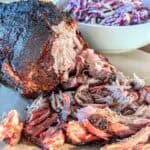
Smoked Pork Butt (Juicy Pulled Pork Recipe)
Smoked Pork Butt is a slow-smoked cut of pork shoulder cooked until tender and shredded into juicy pulled pork. It’s a family-style BBQ recipe that works well for backyard gatherings, weekend cooks, or meal prep for the week. Unlike traditional low-and-slow versions, this method cooks at 275°F and finishes wrapped with butter and hot honey to ensure it stays moist and deeply flavorful.
Servings: 4
Calories: 83kcal
Equipment
- 1 Traeger Grill or pellet smoker
Ingredients
- 4 pounds Boneless Pork Butt, pasture raised
- 2 tablespoons Stone Ground Mustard
- 3 tablespoons Pulled Pork Rub or your favorite BBQ Rub
- 3 tablespoons Unsalted Butter
- 2 tablespoons Hot Honey
- 1 teaspoon Coconut Sugar
Instructions
- Start by placing the boneless pork butt on a large cutting board. Trim off any thick, hard exterior fat, but don’t strip it completely. Leave a thin layer behind. That little bit of fat helps protect the meat as it smokes and keeps everything tender. If the pork is uneven from the bone being removed, shape it so it cooks more evenly.4 pounds Boneless Pork Butt, pasture raised
- Use paper towels and really dry the surface on all sides. This step matters more than people think. A dry surface helps the bark develop properly instead of steaming.
- Spread a thin layer of stone-ground mustard over the entire pork butt. You should barely see it. It’s not there for flavor. It’s there to help the seasoning stick and build that dark, flavorful crust.2 tablespoons Stone Ground Mustard
- Sprinkle your homemade pulled pork rub over all sides and gently press it into the surface. Don’t rub it around aggressively. Just press so it adheres. Let the pork rest uncovered for about 15 minutes while the smoker preheats. This gives the seasoning time to settle and turn slightly tacky.3 tablespoons Pulled Pork Rub
- Place the pork butt directly on the smoker grates, fat side up. Close the lid and let it cook undisturbed. At 275°F, it will steadily build color and flavor without dragging the day out. After about 3 to 4 hours, start checking the internal temperature. You’re looking for around 165 to 170°F and a bark that looks dark and set.
- Once the bark is where you want it, lay out three layers of heavy-duty foil. Place the pork in the center and top it with slices of butter, a drizzle of Mike’s Hot Honey, and a small sprinkle of coconut sugar. Wrap it tightly so no steam escapes. This is where the pork transitions from smoky to tender.3 tablespoons Unsalted Butter, 2 tablespoons Hot Honey, 1 teaspoon Coconut Sugar
- Return the wrapped pork to the smoker and continue cooking at 275°F for about 1.5-2 hours. Start checking for doneness once it reaches about 195°F. The final internal temperature will likely fall somewhere between 200 and 203°F, but what really matters is how it feels. The probe should slide in easily with very little resistance.
- Remove the pork from the smoker and let it rest, still wrapped, for at least one hour. This gives the juices time to redistribute so they stay in the meat instead of running out when you shred it. After one our carefully unwrap the pork and pour the cooking juices into a bowl. Shred the meat using forks or meat claws, then slowly mix some of the reserved liquid back in until it’s juicy and evenly coated. Taste and adjust with a pinch of salt if needed.
Notes
Nadia's Expert Tips & Notes
- Buy the best pork you can find. This recipe is simple on purpose, so the quality of the meat really matters. When you start with pasture-raised pork from a source like ButcherBox, you can taste the difference. Better marbling means better texture, and better texture means you don’t have to drown it in sauce later.
- Cook to tenderness, not just temperature. The temp for smoked pork butt will usually land somewhere between 200 and 203°F, but that number is just a guide. What you’re really looking for is how it feels. When the probe slides into the thickest part with almost no resistance, like softened butter, it’s ready.
- Don’t rush the rest. This is where people get impatient. Letting the smoked pulled pork rest, still wrapped, gives the juices time to redistribute. If you shred too early, you’ll see steam pouring out and moisture escaping. Give it at least an hour. It makes a difference.
- Trim only what won’t render. You don’t need to strip the pork bare. Remove thick, hard exterior fat, but leave a thin layer behind. That fat protects the meat and slowly renders during the cook, keeping the interior tender.
- Fat Side Up vs Fat Side Down. This is one of the most common questions when smoking pork butt. I cook mine fat side up so the fat slowly renders and bastes the meat as it cooks. On pellet grills like a Traeger, the heat comes from below, so the fat layer also helps protect the pork from direct heat. That said, both methods work. The most important thing is starting with a pork butt that has good marbling and cooking it until it’s truly tender.
- Keep the lid closed. Especially if you’re making Traeger smoked pork butt, every time you open the lid, you lose heat and extend your cook time. Trust the process. Let the smoker do its job.
- Balance bark and moisture intentionally. If you want softer, juicier pulled pork, use foil for the wrap. If you want a firmer bark and slightly drier exterior, use butcher paper. There isn’t one right answer. It just depends on what kind of finish you prefer.
Nutrition
Calories: 83kcal | Carbohydrates: 1g | Protein: 0.4g | Fat: 9g | Saturated Fat: 5g | Polyunsaturated Fat: 0.4g | Monounsaturated Fat: 2g | Trans Fat: 0.3g | Cholesterol: 23mg | Sodium: 86mg | Potassium: 14mg | Fiber: 0.3g | Sugar: 1g | Vitamin A: 268IU | Vitamin C: 0.03mg | Calcium: 7mg | Iron: 0.1mg
